The Curious Allure of Bamboo
Bamboo has been loved in Japan since ancient times, familiar from the tale of Princess Kaguya and from the idiom that likens a straightforward, unclouded temperament to “bamboo split clean down the grain.” Captivated by bamboo while still young, Toshie Ōki studied under the Living National Treasure Iizuka Shōkansai and entered the path of bamboo work. On the occasion of her receiving the President's Prize at the 73rd Japan Traditional Kogei Exhibition and the 4th Asuka Cruise Prize (2026), we spoke with her about her first encounter with bamboo work, how her distinctive approach to form came about, and what making means to her.
Interview and text: Ayaka Fujita (ARTerrace)
——When did you first encounter bamboo work?
In my second year of high school. An exhibition of the Living National Treasure Iizuka Shōkansai (now deceased) was being held near the school I attended, and that was where I first encountered bamboo work. Until then, bamboo had meant things used in daily life—flower baskets, colanders and the like. The works I saw at that exhibition were bamboo baskets and, at the same time, fully realised as artistic expression. I remember being quite shaken by the sight of use and the artist's expression coexisting.
——What processes does bamboo pass through before it becomes a work?
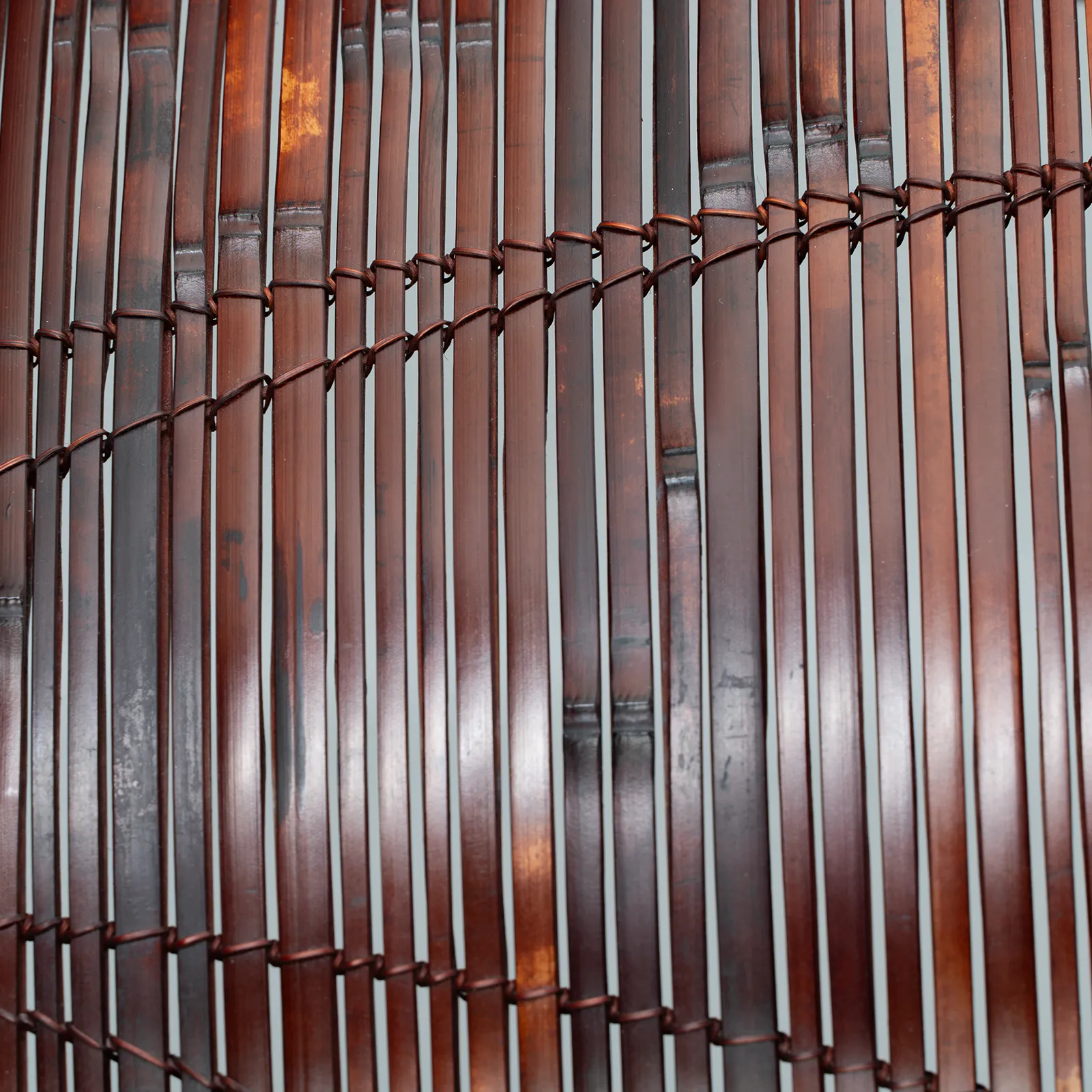
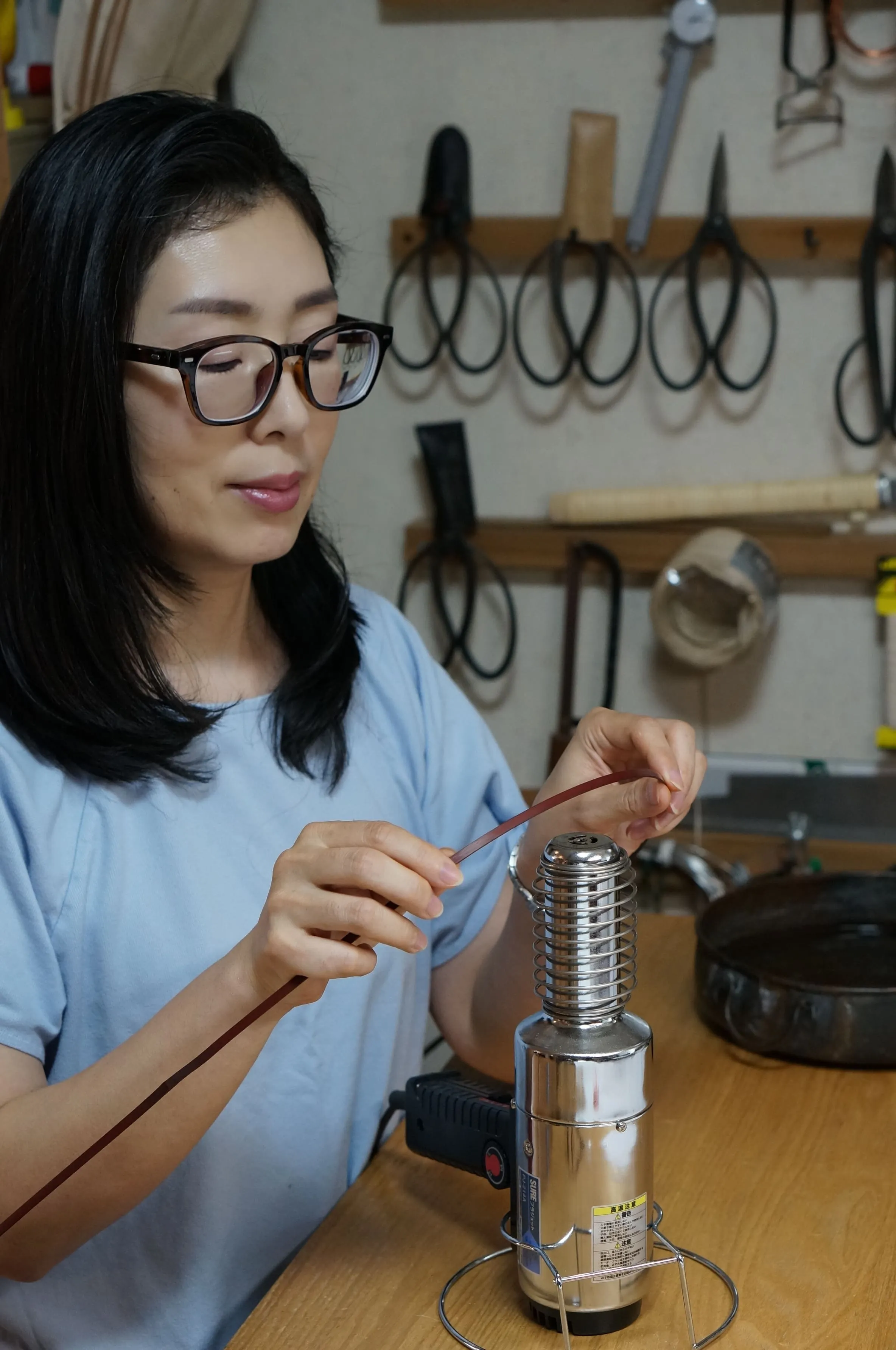
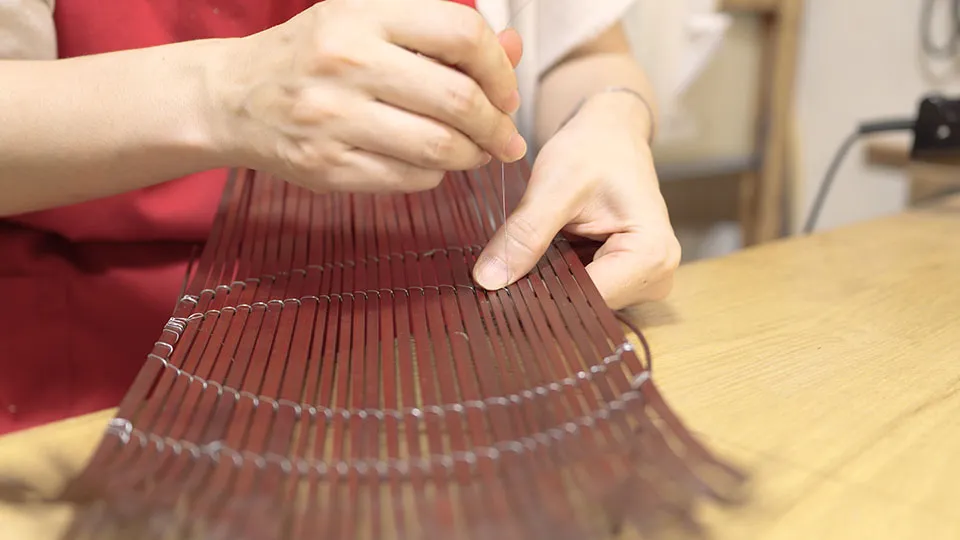
It begins with selecting the bamboo. The surface is dressed in a stage called “polishing,” and the culm is cut to the required length with a saw. It is then split finely with a billhook, and in a stage called “flesh-stripping” the unwanted inner portion is removed. Once the pieces are roughly even in thickness and width, the next stage, “width-cutting,” brings the strips to a uniform width. After that comes “line-drawing” to even out the thickness, and finally chamfering. If colour is to be applied, the strips are dyed after chamfering. Only then is the bamboo strip ready as material for a work.
——Where do the ideas for your works come from?
Often from something that catches my eye in daily life, or from a scene I happen upon when out with my family. I find myself always searching: “ah, this could be turned to account in bamboo.” I see sunlight filtering through the trees and think, “I want to take this atmosphere, this impression, into a work.” All sorts of things I encounter in the course of living connect, in my mind, to bamboo.
——Is there anything you find especially difficult in the making?
Whenever I attempt a new form of expression or a new shape, something unforeseen happens almost without fail. The struggle lies in how to get past what is not working, and how to bring it together as a finished work in the end. Even when it does not go as first envisaged, I change my approach again and again, testing as I give it form. Making something new is that cycle, repeated.
——What is the appeal of bamboo for you?
I find bamboo beautiful simply growing where it stands. Made into strips, its surface is lustrous and beautiful to the eye. And it has a rhythmic, spring-like resilience. The particular flex and tension of bamboo is an appeal no other material has. I am always thinking that I want to make works in which that vitality comes alive.
In search of free form
——In terms of technique, what characterises your works?
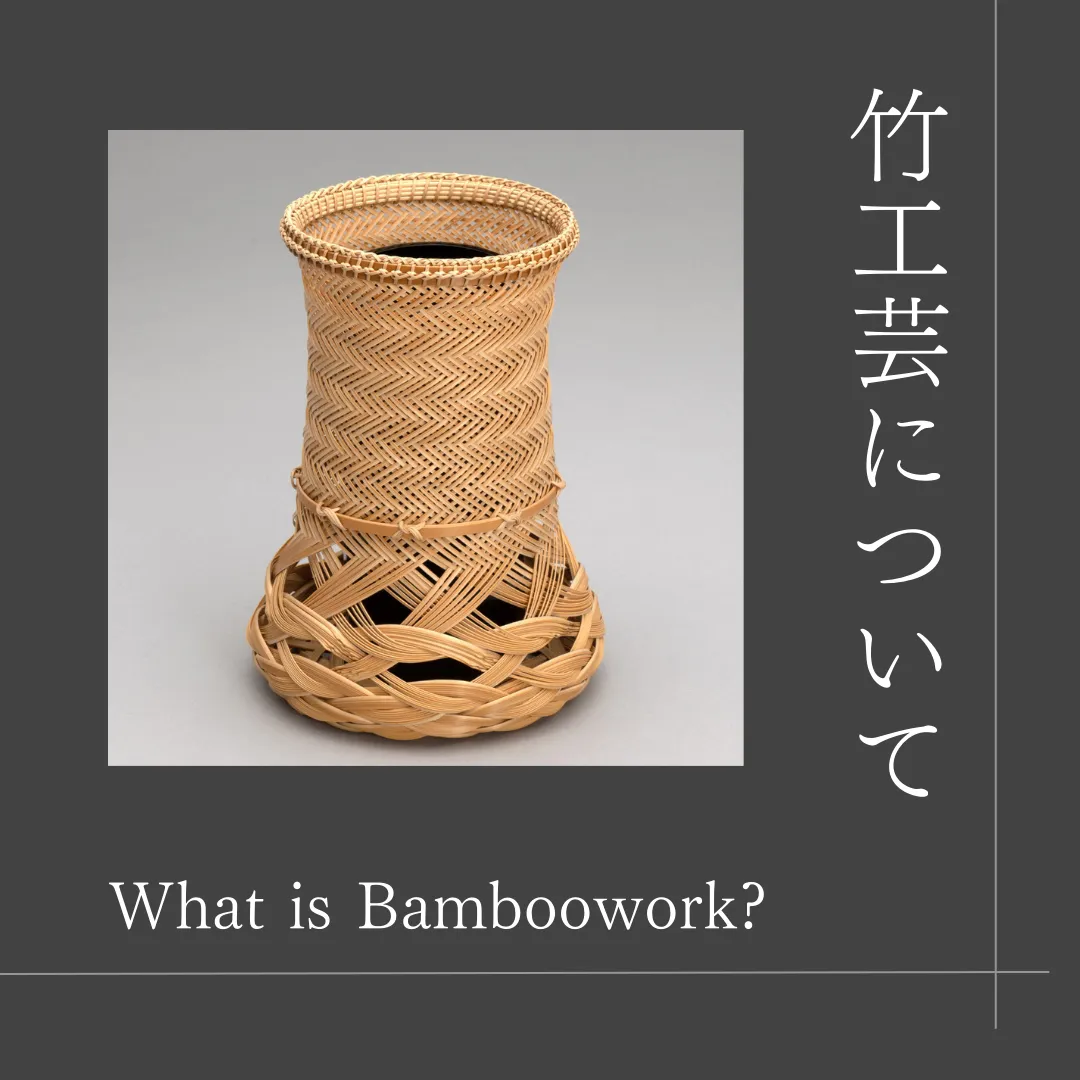
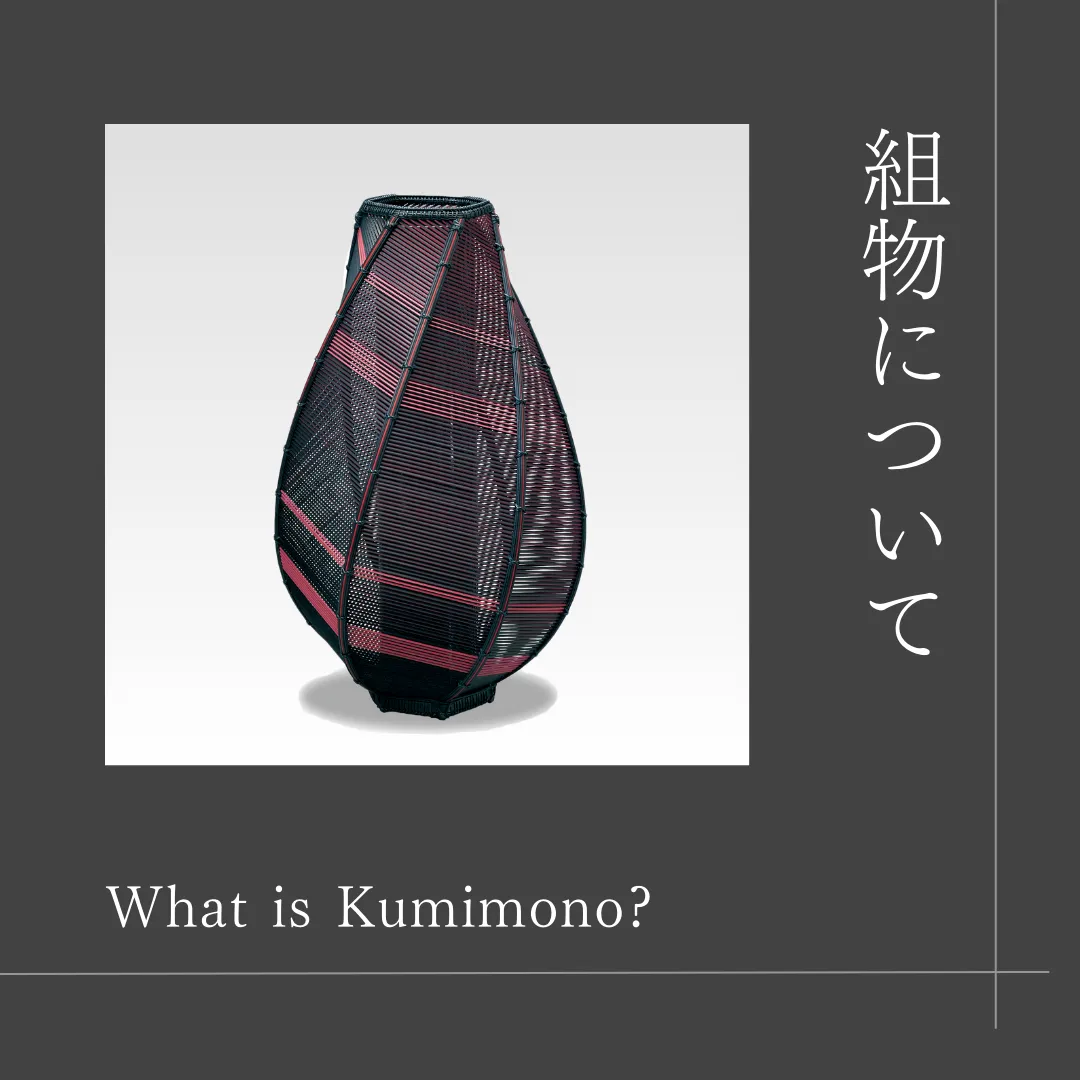
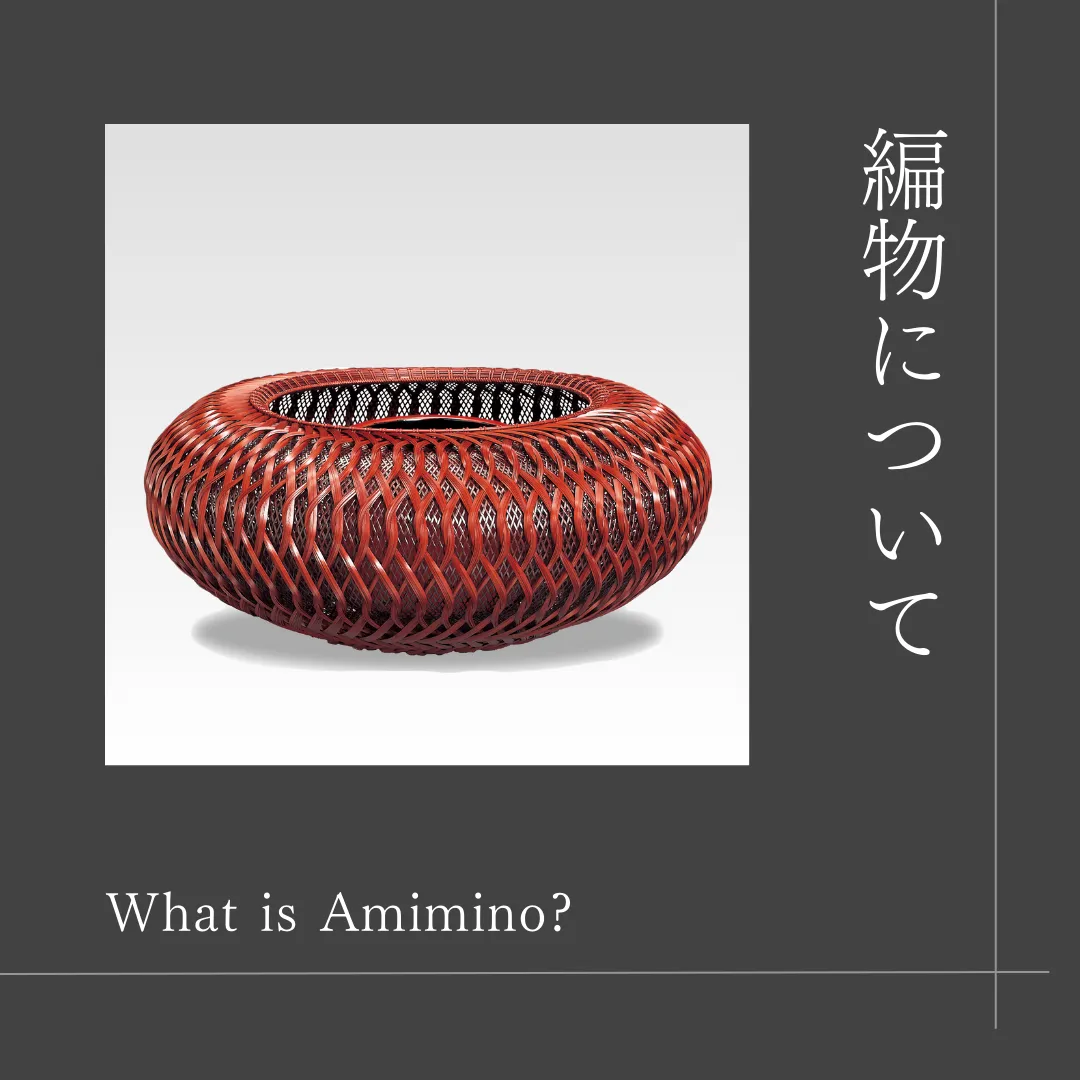
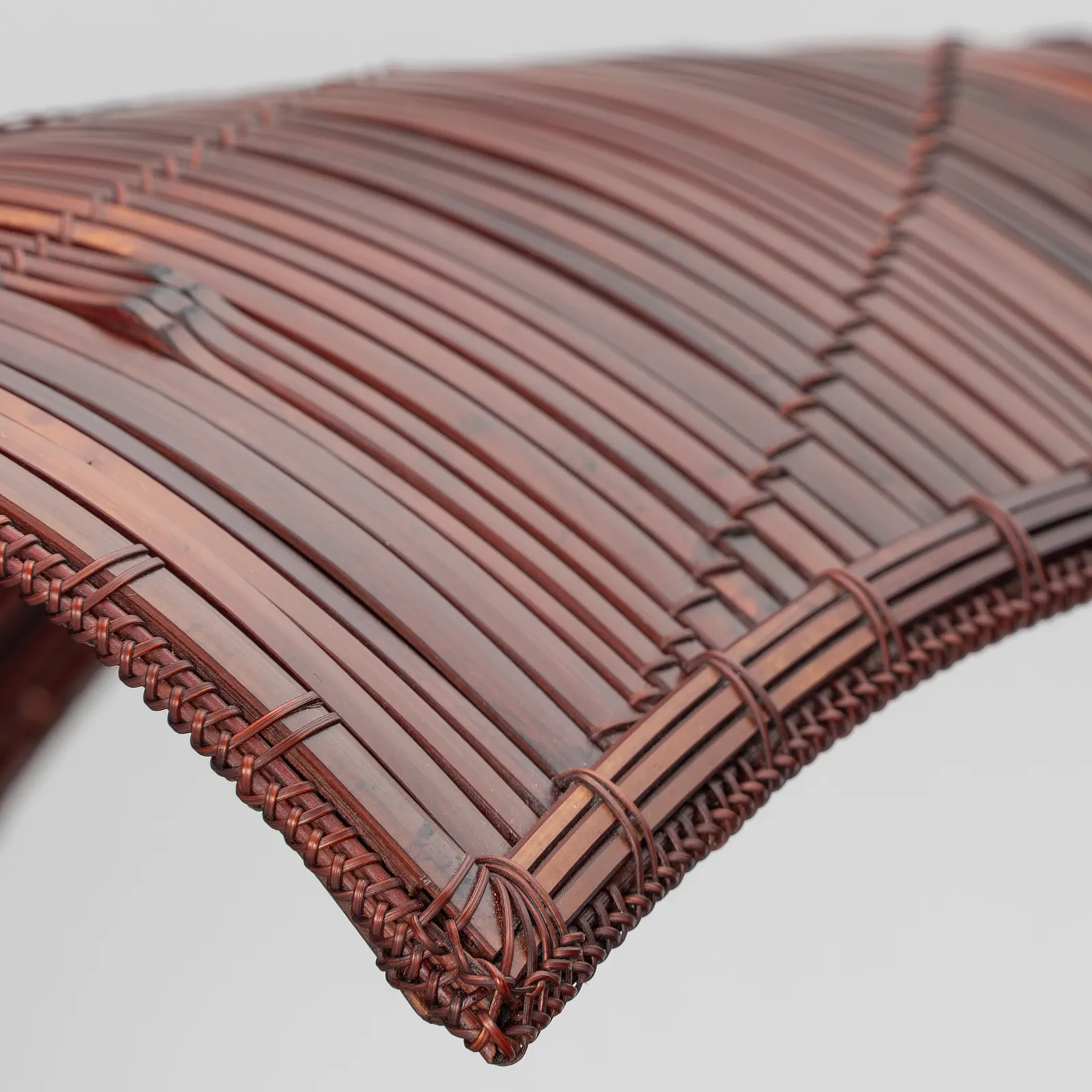
The techniques of bamboo work divide broadly into two. One is plaiting with fine, thin bamboo strips (→ the amimono, or plaiting, technique). The other is assembling bamboo that retains a certain thickness and width (→ the kumimono, or assembling, technique), in which the form is built without plaiting and secured with rattan and other materials. At present I work mainly in the assembling technique. With plaiting, the method of plaiting limits the finished form to a degree. Assembling allows comparatively free modelling. Because I want to make works that are more sculptural, I am exploring how far bamboo can be carried as expression within the assembling method.
On takaori, an original technique
——Is that how your own technique, takaori, came about?
It began when I wondered whether I could express the ridgeline of a mountain using bamboo strips. As a rule, bamboo snaps if it is bent at a sharp angle. I wanted to draw a crisp line at an angle that looks folded, as in origami, without actually breaking the bamboo. Giving each strip a sharp crease and arranging them with the positions shifted slightly, the creases emerge as a continuous ridgeline. I combined the ridgeline I wanted to express with the look of folding and named it takaori.
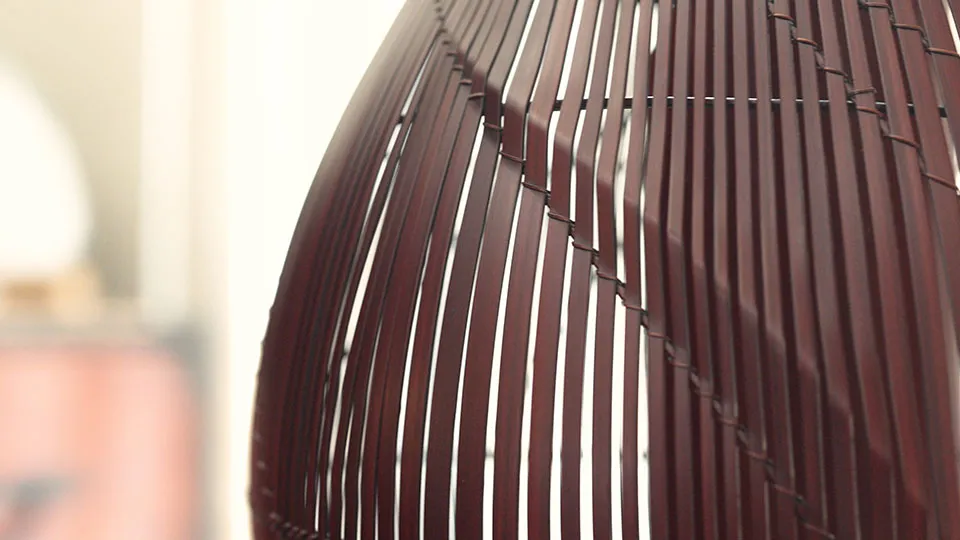
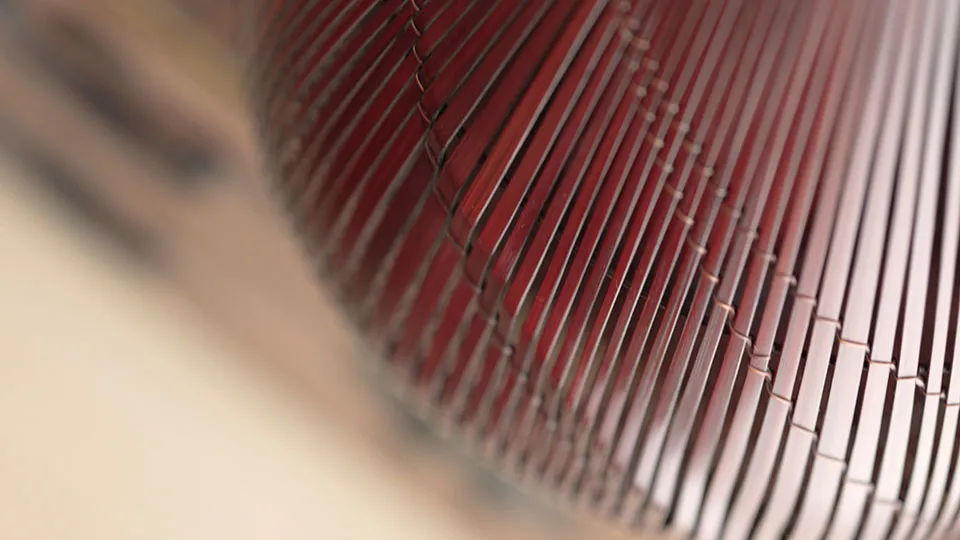
Takaori Flower Basket: Kagaribi (Watch Fire) / Toshie Ōki
——Looking at your titles, many of the works seem to evoke water, the sea and waves.
Perhaps because I grew up in a landlocked prefecture, I am drawn to the sea and to waves. I very much like watching the flow of water and the movement of waves. Scenes that stay with me—from daily life, or from somewhere my family has travelled—sometimes become works later on.
——Did the work to be exhibited aboard the Asuka also come from something connected with the sea?
My family travelled to Okinawa and we ran into a typhoon. We could not leave the lodging, and there was nothing to do but watch the raging sea through the window. With wild waves in front of me, like something out of a picture by Katsushika Hokusai, I thought: waves really do have tremendous power (laughs). And because the typhoon wandered, no planes flew for about a week.
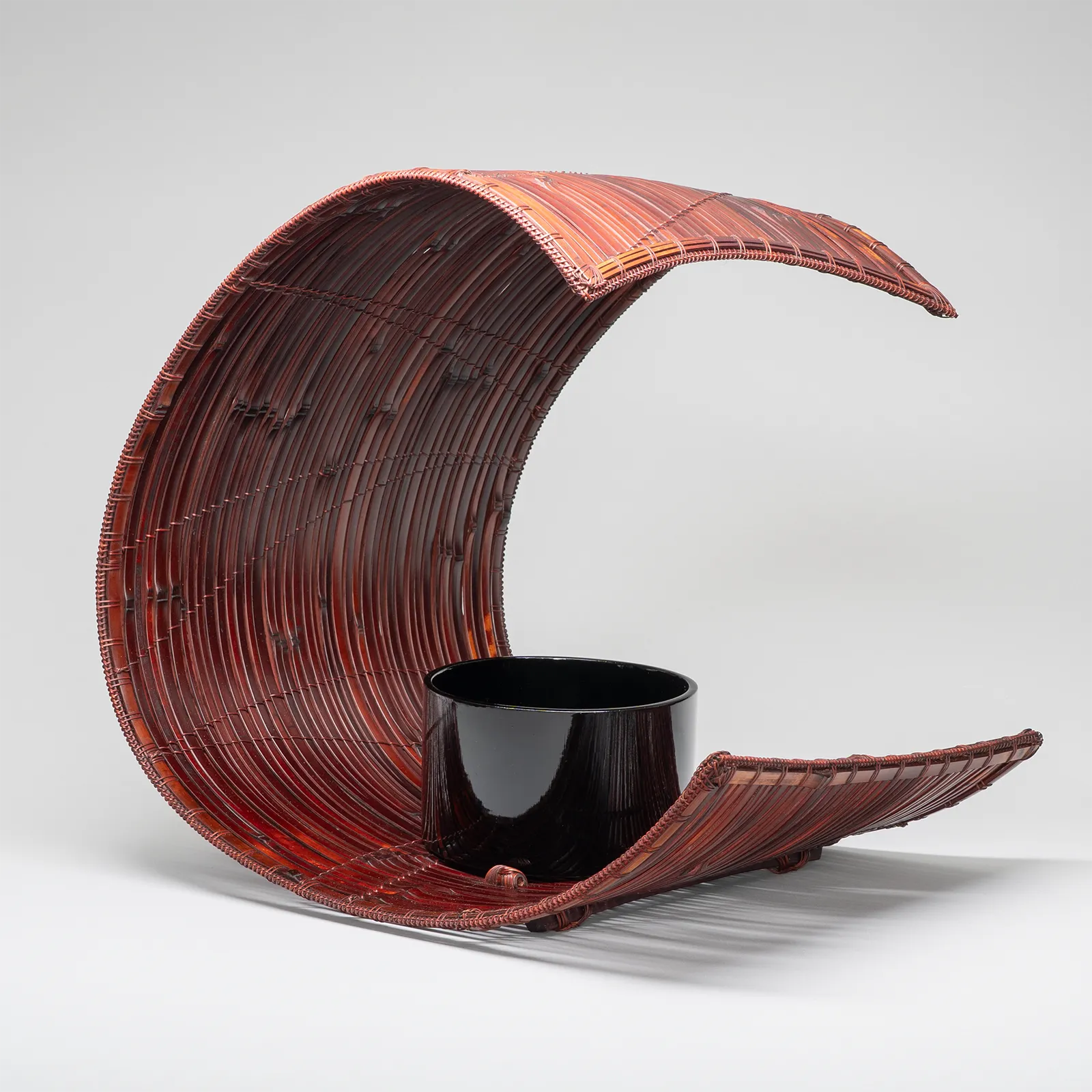
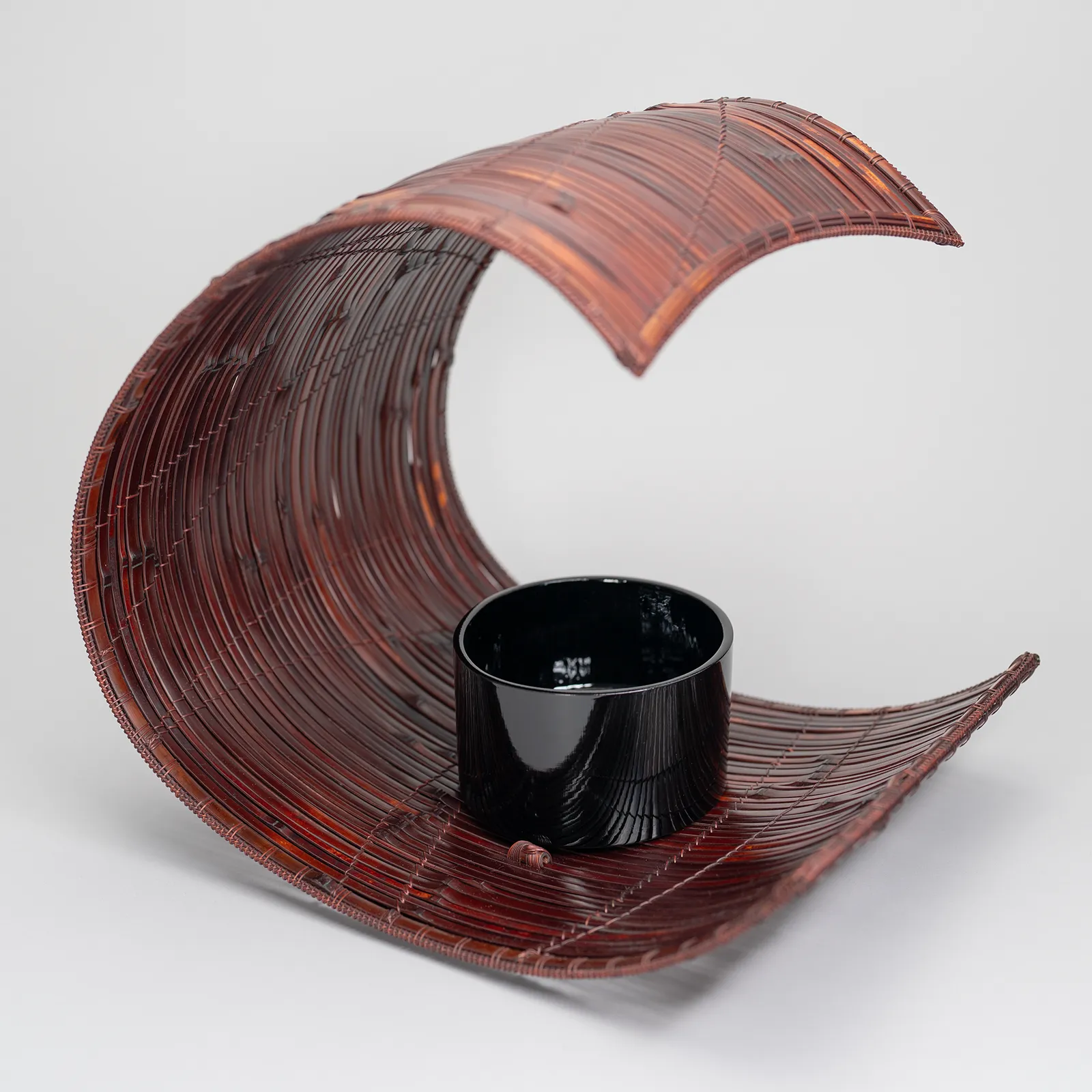
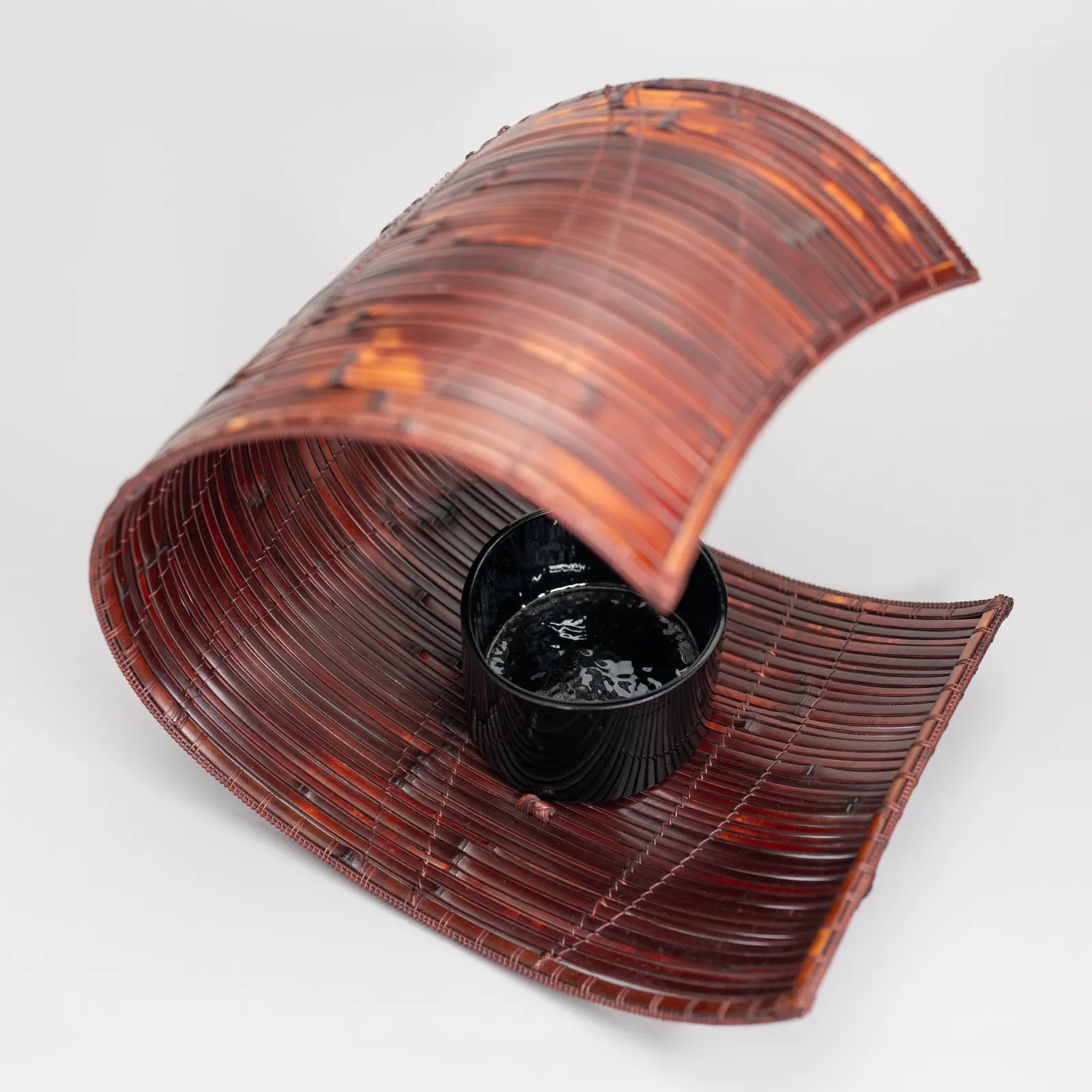
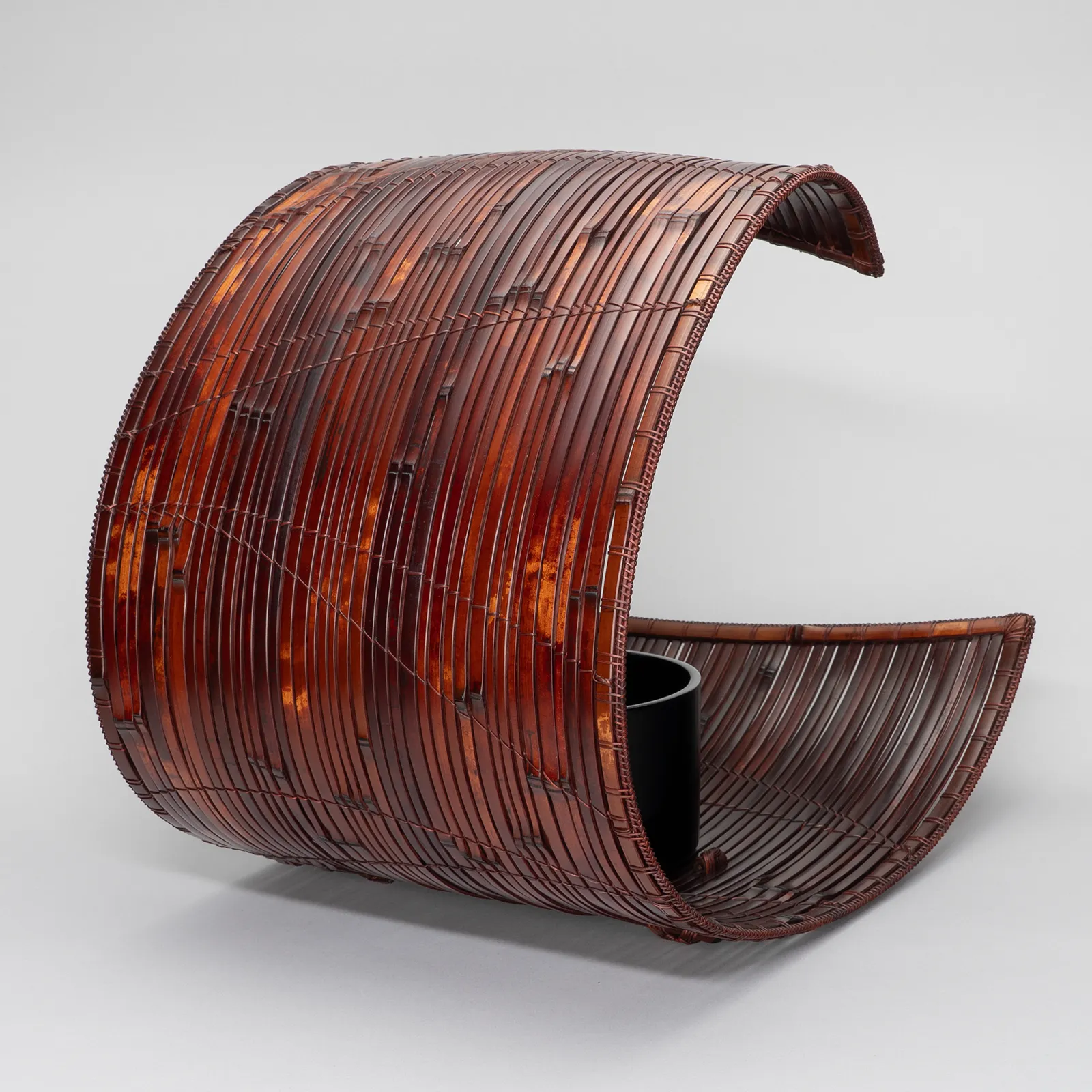
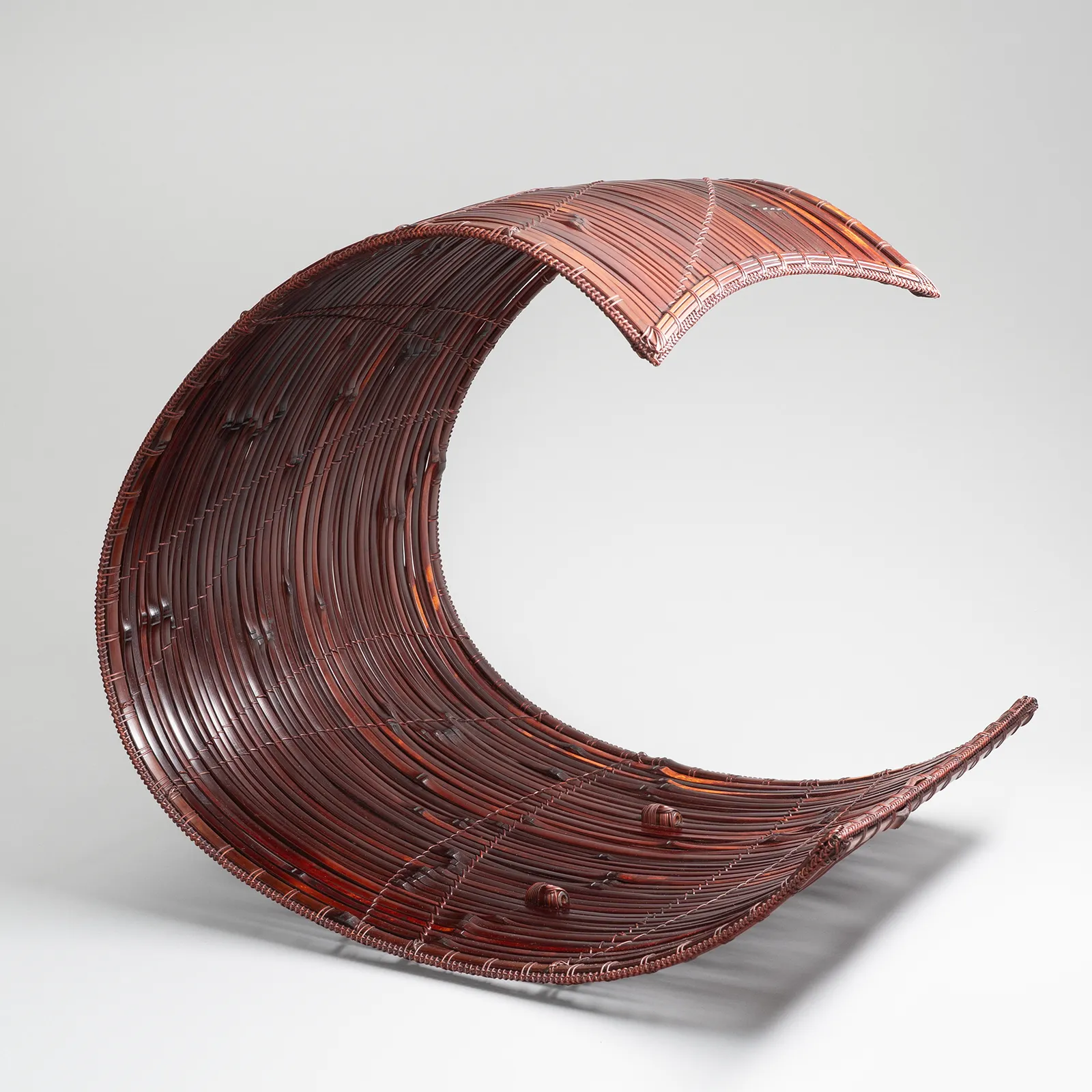
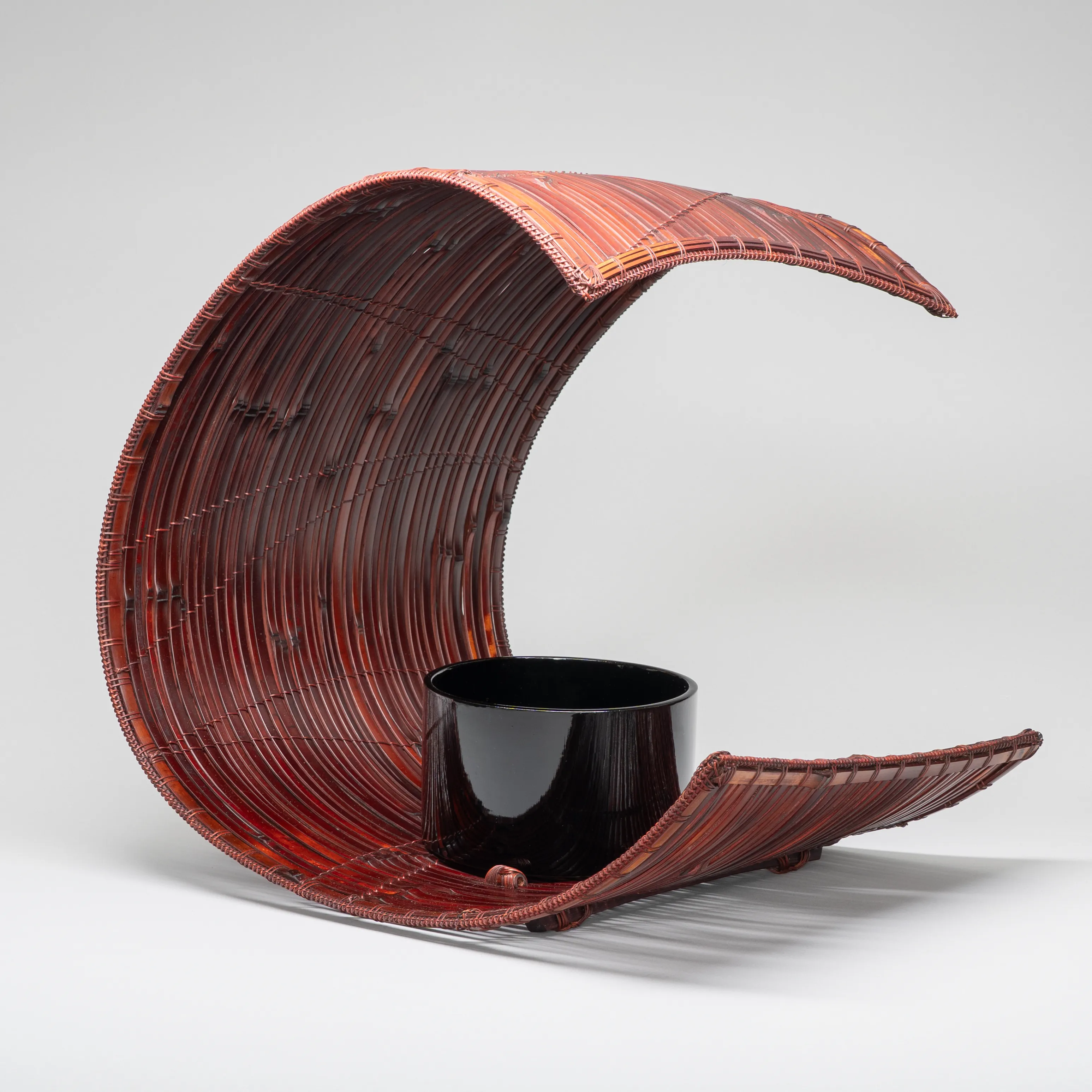
I had made several works with waves as a motif before, but I had mostly expressed the gentle movement of ripples. The feeling welled up that I should somehow turn this frustrating experience to account, and I decided to make “violent waves,” unlike anything I had made before. This is the first of those works.
——Does the work use a different bamboo from your previous pieces?
For this work I used smoked bamboo (susudake). Susudake is bamboo that was used as a building material in old farmhouses and other buildings, and that has been smoked over many years by the hearth fire. It seems to me to have a distinctive strength that ordinary bamboo does not. Since I wanted to express powerful waves, I took the presence of susudake as a figure for the power of the sea.
——How would you like people to enjoy your works in their daily lives?
I would like people to enjoy them without bracing themselves because “this is a craft work.” Simply keep near you something you found lovely, or charming. Something that lifts you when it happens to catch your eye. I would be glad if my works could be that kind of presence.
“We have guests today, so let us arrange some flowers.” “There was a beautiful chestnut burr on the ground—let us display it.” I hope that having a work at hand brings new pleasure and ease into everyday life.
“Making is living”
——What does “making” mean to you?
It feels like “making is living.” That said, I do not necessarily handle bamboo every single day. I rest on days off, and I travel with my family. But whether travelling or going about ordinary life, somewhere in my mind I am asking, “could this be turned to account in a work?” Within me there may be nothing that separates living from making; perhaps they are one. One of the things that set me on the path of bamboo work was the experience of being moved by the works of the artist who later became my teacher. Just as I once received something from a work and was moved by it, I want to make works that move people.
——A message, please, for those who will see your work aboard the Asuka.
I am told the Asuka is a wonderful space. I should be glad if seeing craft works there made the experience richer still.
One day, a raging sea appeared before an artist who had been expressing gentle ripples. The form of waves in which the overwhelming power of nature shows itself is set down as a work, strip by strip of bamboo. “Making is living.” Toshie Ōki's words may describe the very condition of kogei: expression generated continuously out of daily life, with no division between living and making. Her works are held by museums in Japan as well as by the Victoria and Albert Museum and the Portland Art Museum.