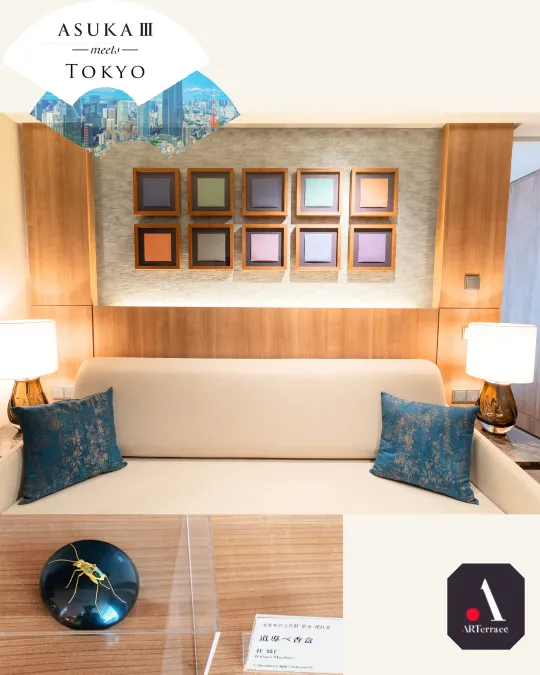
A Story Inherited from Edo — Introducing the “Tokyo” Room from ASUKA III meets 47 Prefectures
As part of the ASUKA III meets 47 Prefectures initiative aboard the cruise ship ASUKA III, which sets sail on July 20, ARTerrace has partnered with NYK Cruises Co., Ltd. and Anchor Ship Partners Co., Ltd. to curate the “Tokyo Room,” one of the ship’s exclusive Midship Suites. This initiative seeks to celebrate the distinct cultural identities of each of Japan’s 47 prefectures through thoughtfully designed guest rooms. By showcasing the beauty of regional traditions, the project aims to foster deeper connections between people, regions, and heritage—ultimately contributing to the revitalization of local communities.
✿
In this column, we are pleased to highlight the exquisite traditional craftworks selected for the Tokyo Room.
The concept proposed by ARTerrace is “A Story Inherited from Edo.” The refined techniques and motifs that once flourished in the merchant culture of Edo have been carefully passed down through generations and still breathe life into present-day Tokyo. At the same time, Tokyo remains a dynamic metropolis, constantly evolving by embracing new values and pioneering modern urban culture.
The Tokyo Room presents artworks that embody both tradition and innovation—a distinctive harmony only this city can offer—along with the Japanese aesthetic of "you no bi", or the “beauty of utility.” As a luxurious suite aboard a moving pavilion, the room was envisioned as a stage for life’s finest moments. Every detail—from the selection of artworks to their display—was approached with the utmost care. In particular, the pieces were chosen from Living National Treasure artisans closely tied to Tokyo, ensuring visual harmony with the suite’s color scheme.
Wall Display
▼Framed Edo Komon Textile Fragments (Kobukusa)
By Yasumasa Komiya, Living National Treasure
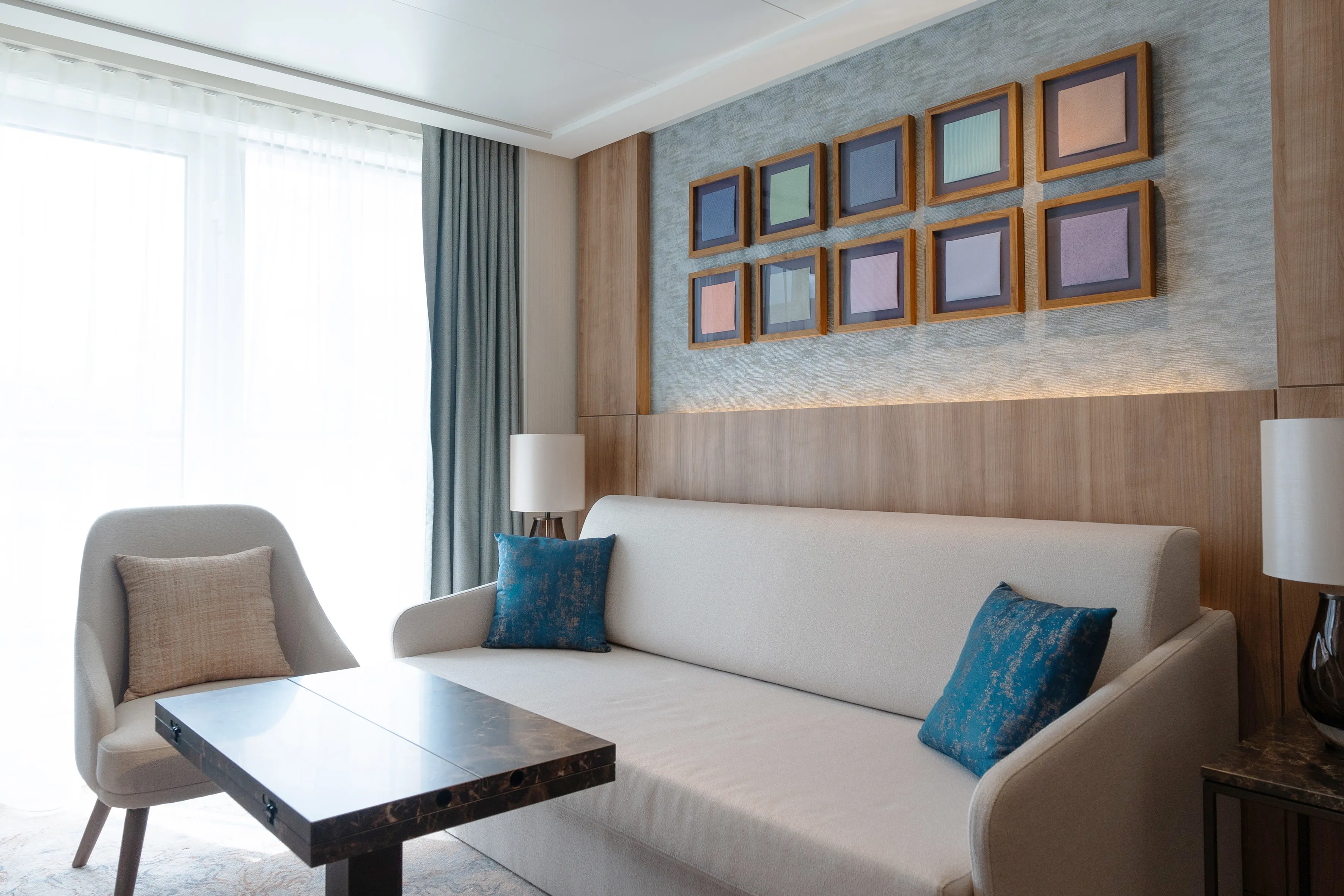
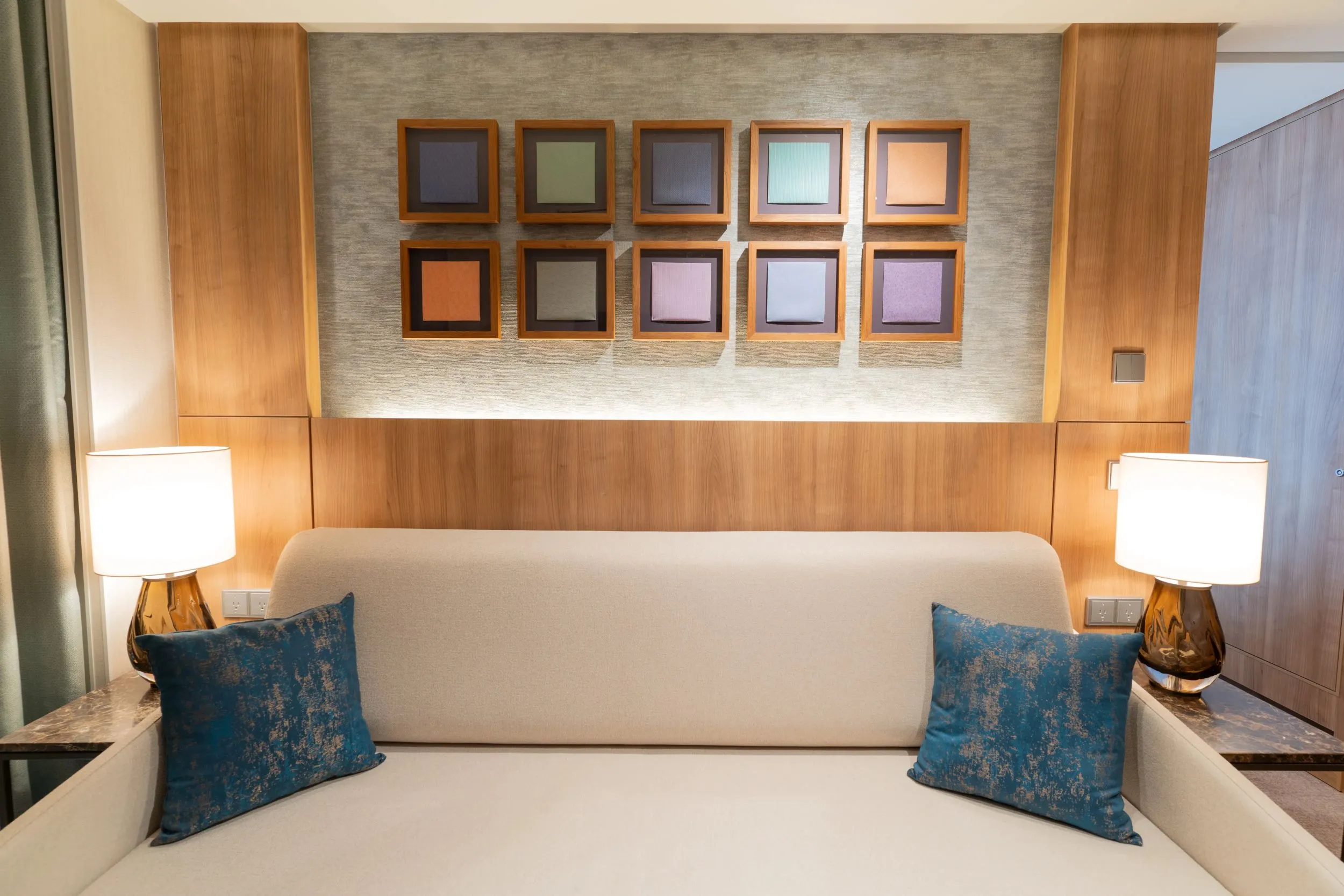
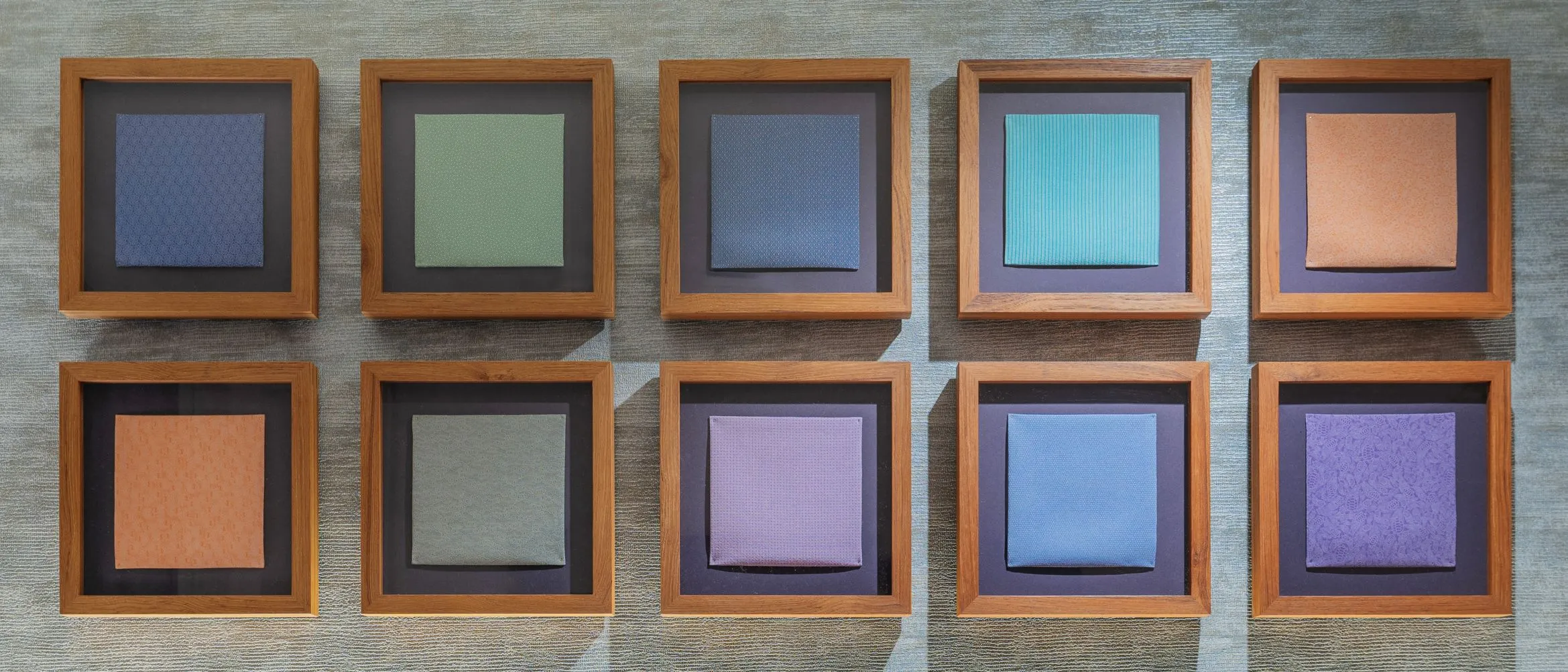
These framed works are the creation of Yasumasa Komiya, a Living National Treasure known for his mastery of Edo Komon, a traditional stencil-dyeing technique. The ten textile fragments—originally kofukusa, small cloths used in tea ceremonies—are artfully composed to form a single wall piece. Edo Komon emerged during the Edo period as a dyeing method for formal samurai attire and townsperson kimono. From a distance, the patterns appear nearly solid, but upon closer inspection, intricate motifs are revealed. The finer the design, the higher the technical demand—and the greater the prestige. The term “Edo Komon” was coined when Komiya’s grandfather, Kōsuke Komiya, was recognized as a Living National Treasure, to distinguish this specific tradition from other types of komon.
For this project, Mr. Komiya selected patterns that are “lavishly traditional, yet delightfully modern”—designs he felt would be engaging as interior decor and express yo no bi. The Goku Misuji motif in the top row is a hallmark of master craftsmanship. The stencil used was carved by the late Hiroshi Kodama, another Living National Treasure famed as a virtuoso of stripe carving.
★ These works are available for purchase on the ARTerrace website ★
Kobukusa – Yotsume × Matsukawabishi
✿✿
▼Sculptural Object “Michishirube” (Tiger Beetle) Incense Container
By Morihito Katsura, Living National Treasure▼
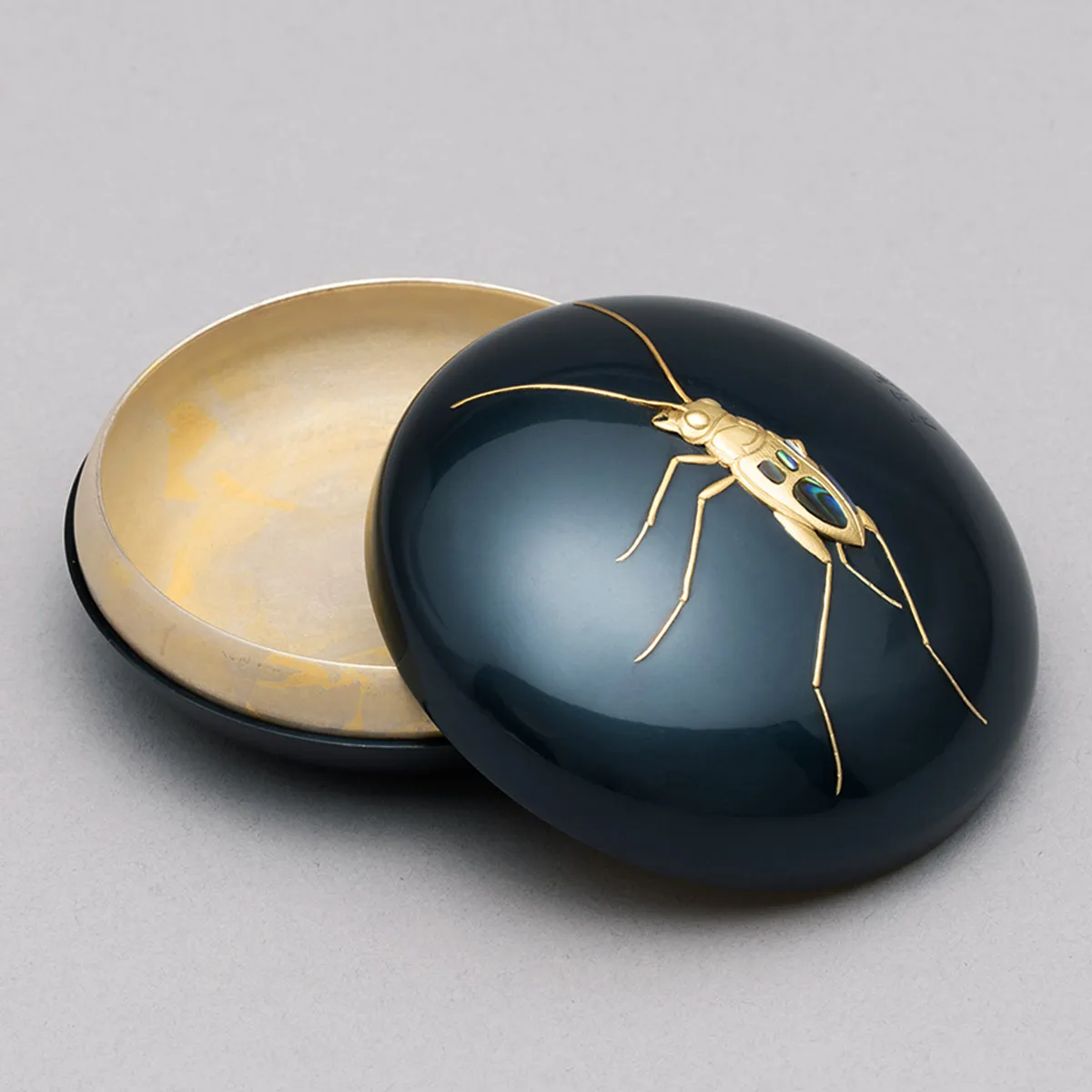
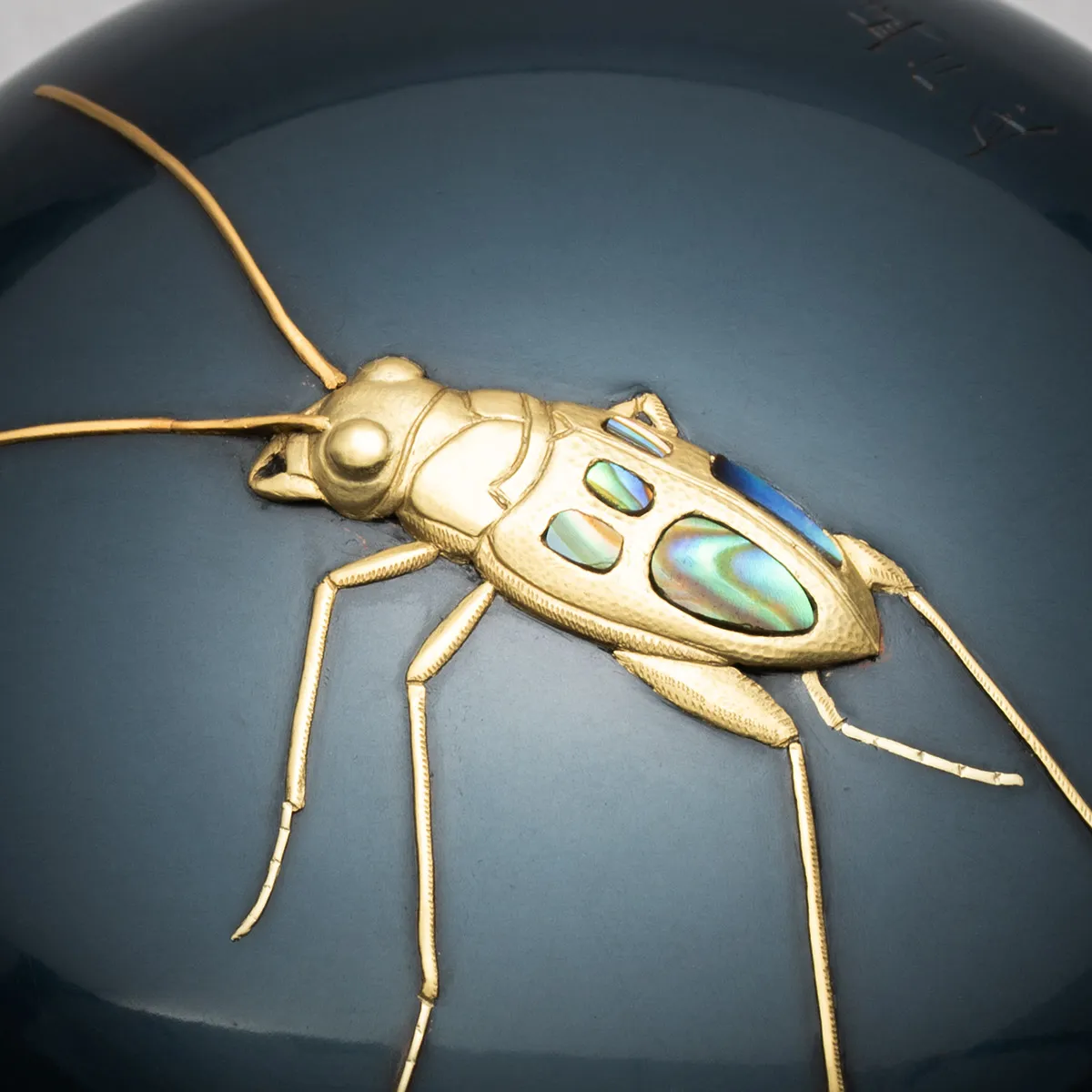
This incense container is the work of Morihito Katsura, a Living National Treasure designated in the field of chōkin, or metal engraving. Chōkin is a traditional metalcraft technique involving the carving, inlaying, and engraving of decorative motifs onto metal using specialized chisels called tagane. These techniques date back to the Muromachi period and were perfected through adornments on sword fittings such as tsuba (guards), menuki (grips), and kōgai (hairpins), as well as armor.
Mr. Katsura belongs to the Yanagawa school, which traces its lineage to Sōmin Yokoya, a renowned metalsmith of early Edo. He is known for both his meticulous adherence to classical techniques and his innovative collaborations with international luxury brands. His hallmark style features delicately hammered, three-dimensional forms created from a single sheet of metal, along with a lustrous finish imbued with a subtle, humid glow.
This piece was inspired by the tiger beetle (hammyō), one of Japan’s most captivating insects. Revered in folklore as a guide, the tiger beetle was affectionately known as michishirube—“the one who shows the way”—due to its behavior of repeatedly fluttering ahead of travelers as if leading them.
The incense container fuses gold, silver, and shakudō (a copper-gold alloy), while its signature mottled pattern is rendered in the niku-zōgan (relief inlay) technique using inlaid shell. Within this palm-sized object lies a concentration of Japan’s metalcraft heritage and artistry—offering a gateway, true to its name, into the world of tradition and beauty.
★ This piece is available for purchase on the ARTerrace website ★
▼For inquiries, please contact us at the following:▼


