The Kindness of Noto Runs Deep into the Earth
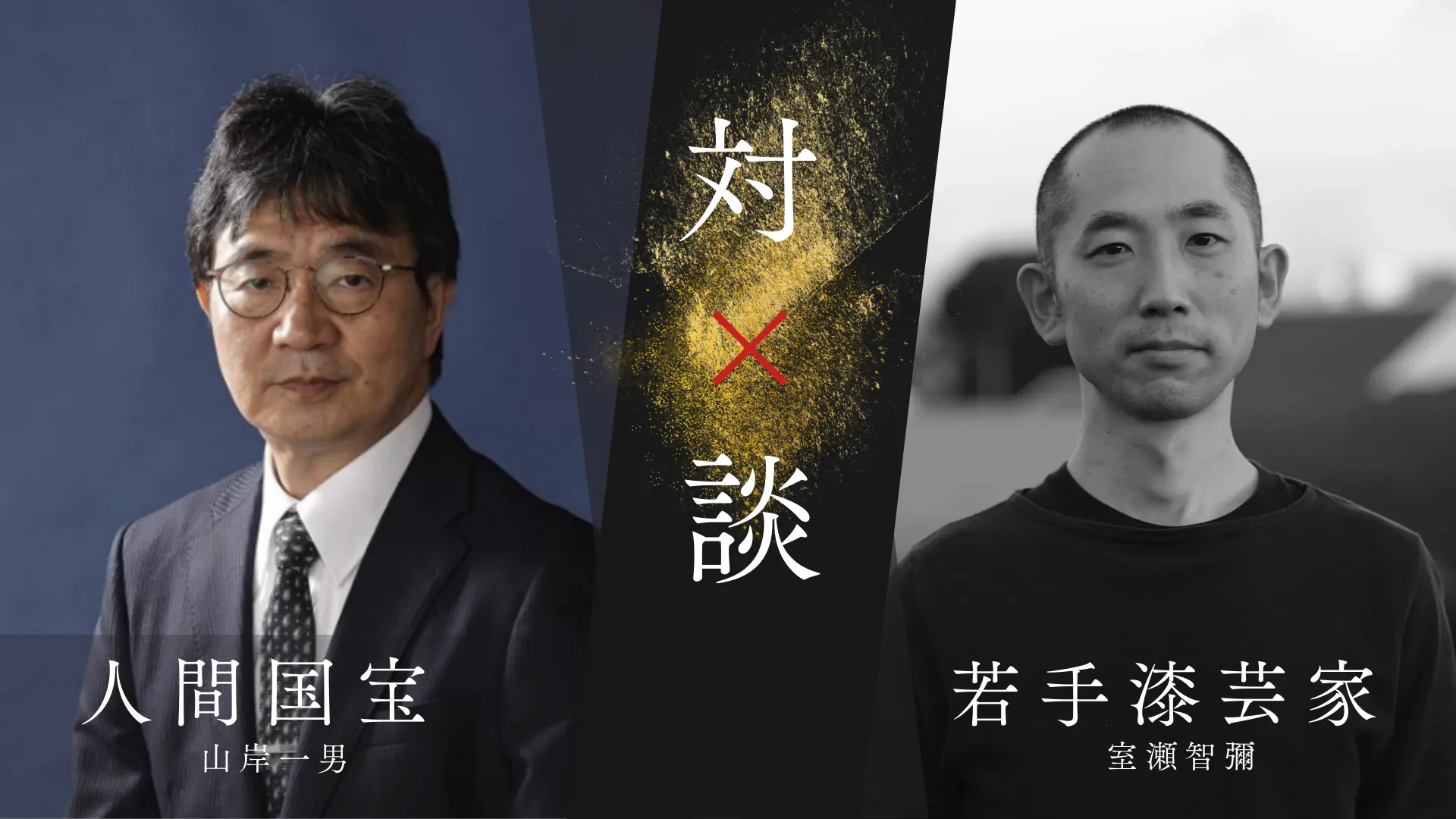
Special Dialogue and Demonstration: Living National Treasure Kazuo Yamagishi × Urushi Artist Tomoya Murose
& Workshop
— From Ship to Shore: Sharing the Tradition and Future of Urushi in the Wake of the Noto Earthquake —
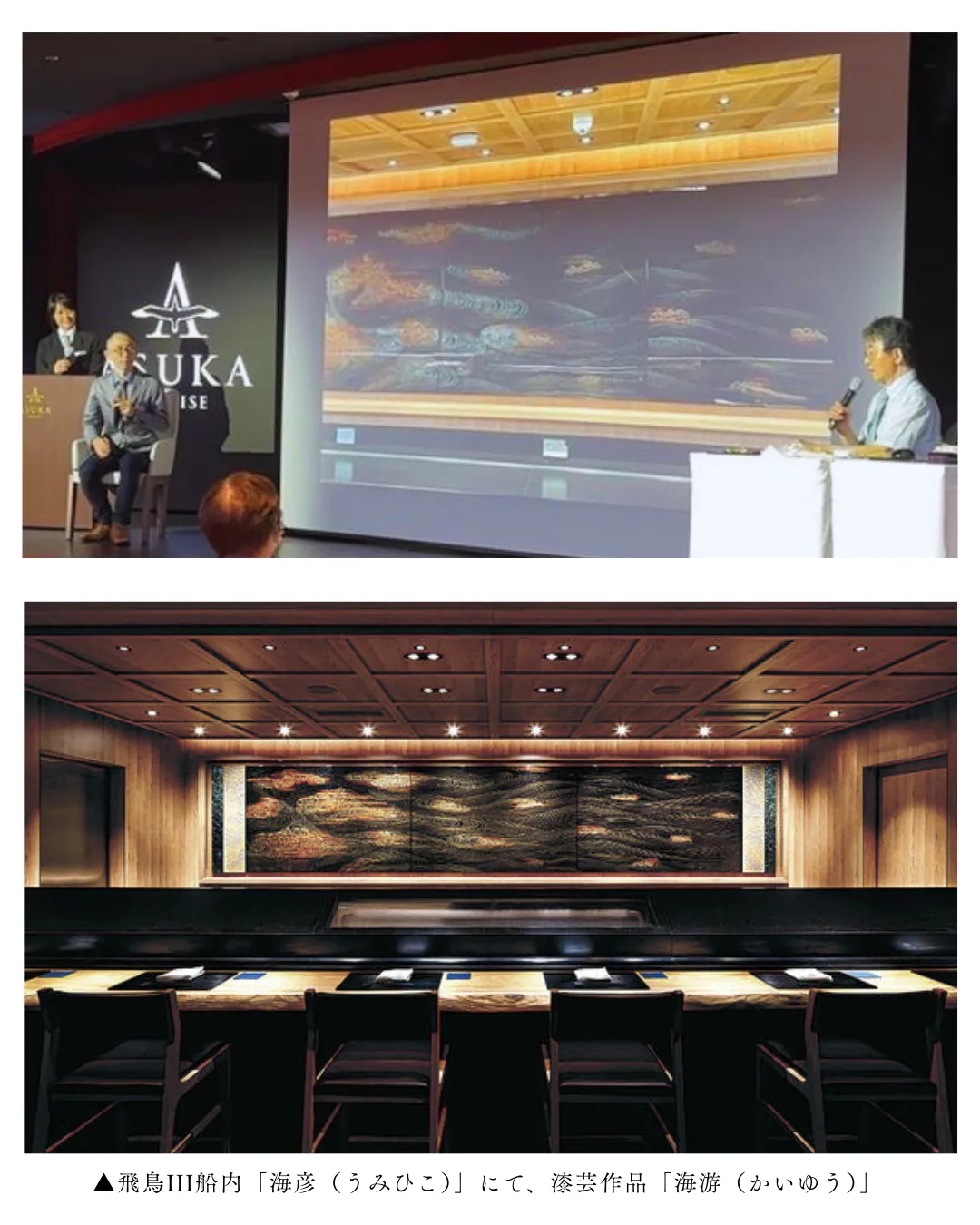
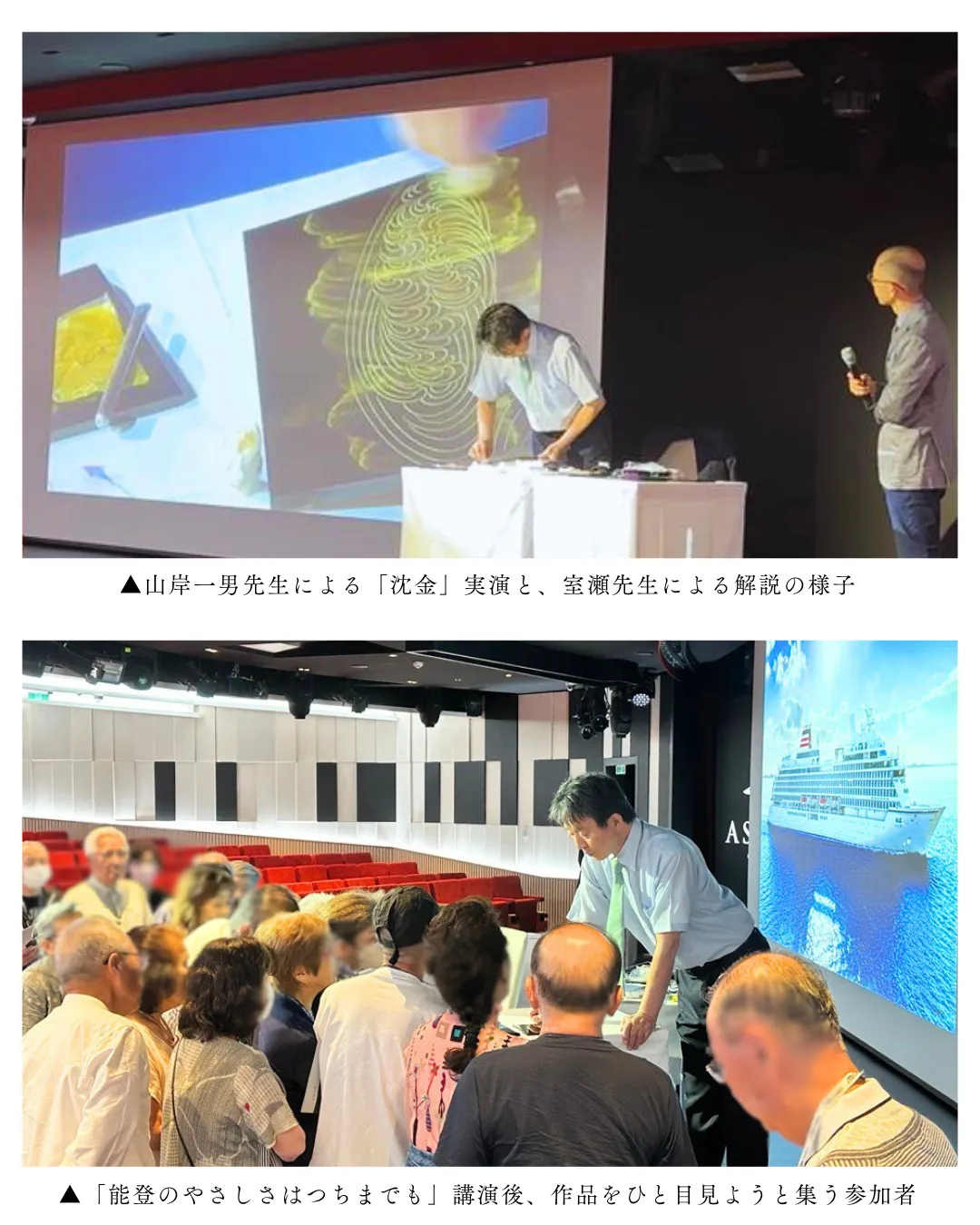
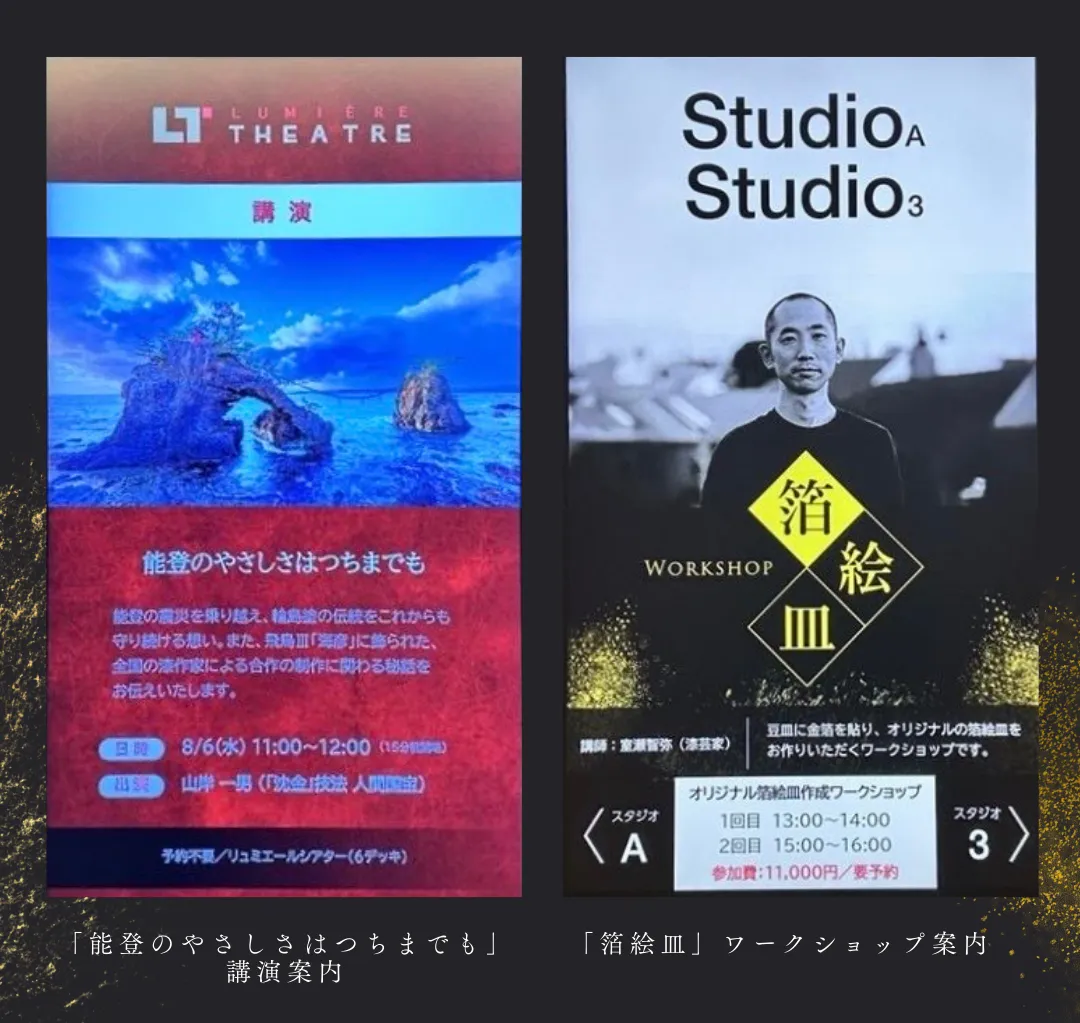
On Wednesday, August 6, 2025, the Lumière Theatre on Deck 6 of the cruise ship Asuka III hosted a special cultural event: “The Kindness of Noto Runs Deep into the Earth,” a dialogue and demonstration featuring Kazuo Yamagishi, Living National Treasure and holder of Important Intangible Cultural Property for Chinkin (gold-inlay carving), and Tomoya Murose, eminent lacquer artist. The program also included a hands-on workshop.
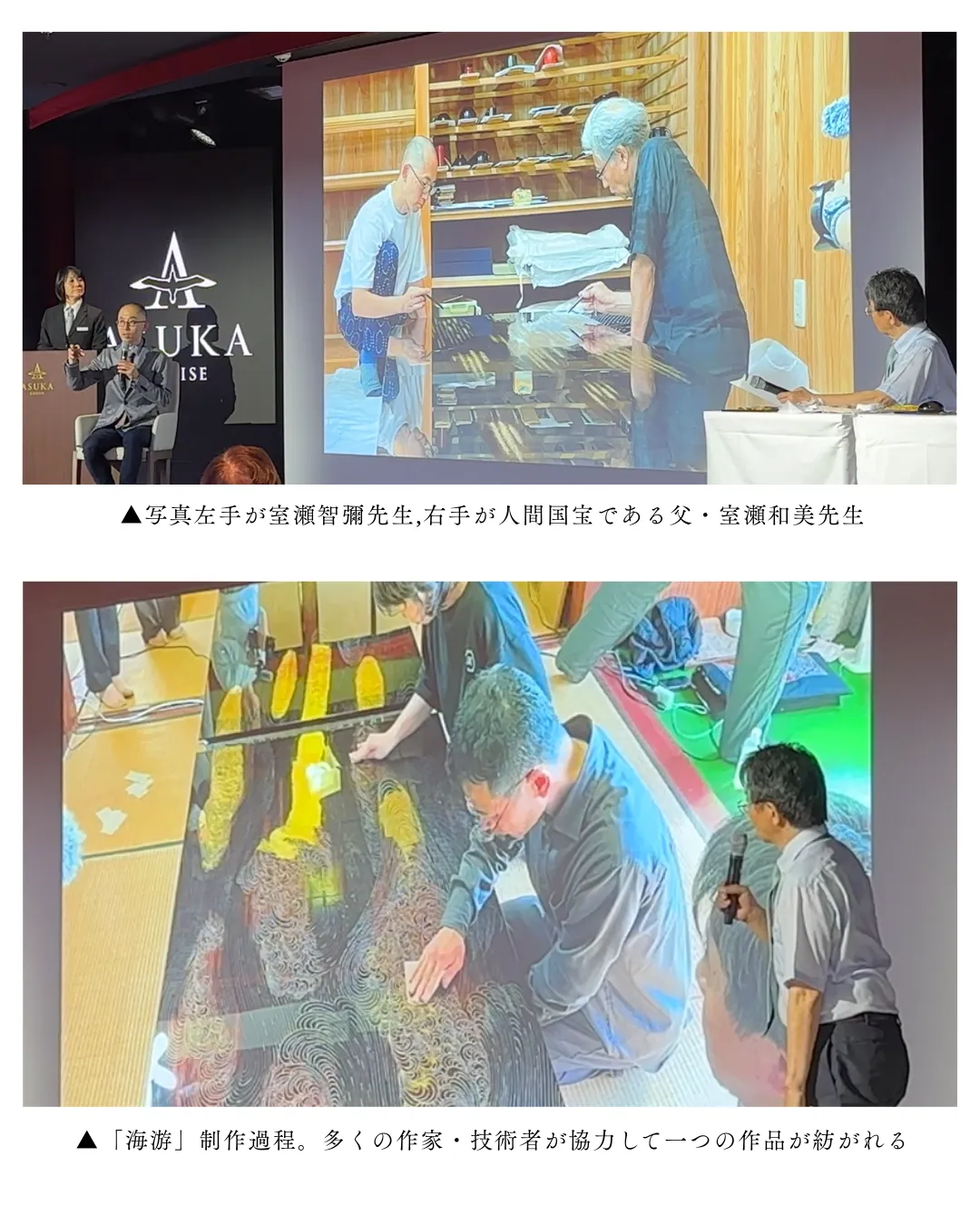
The talk began with reflections on the seven-century history of Wajima-nuri lacquerware, dating back to the mid-Muromachi period, and the severe damage the Noto Peninsula’s lacquer industry suffered in the recent earthquake. Speaking as a Living National Treasure, Yamagishi conveyed his sense of duty: how to ensure this venerable tradition is passed to the next generation. Murose then guided the audience through Yamagishi’s live demonstration of Chinkin, after which the two engaged in a special dialogue revealing the behind-the-scenes story of Kaiyū, a collaborative wall panel installed in the Umi-hiko kappo restaurant aboard Asuka III.

Measuring roughly one meter high and five meters across, Kaiyū is a monumental work in Wajima-nuri, created by master artisans from across Japan. Using Chinkin, maki-e, and roiro techniques, the piece evokes the view of waves seen from a vessel surging toward its home port. The Chinkin sections were executed by Yamagishi’s disciples, Osamu Mizutaniuchi and Yūu Yamagishi; roiro polishing was by Kiyoshi Ōhashi.
The original design came from Living National Treasure Kazumi Murose (maki-e), with contributions from lacquer artists based not only in Wajima but also Tokyo, Shikoku, and Okinawa. Yamagishi noted, “A composition that layers maki-e and chinkin is rare; the brilliance of gold stands out beautifully against the unique transparency of Japanese urushi.”
❀


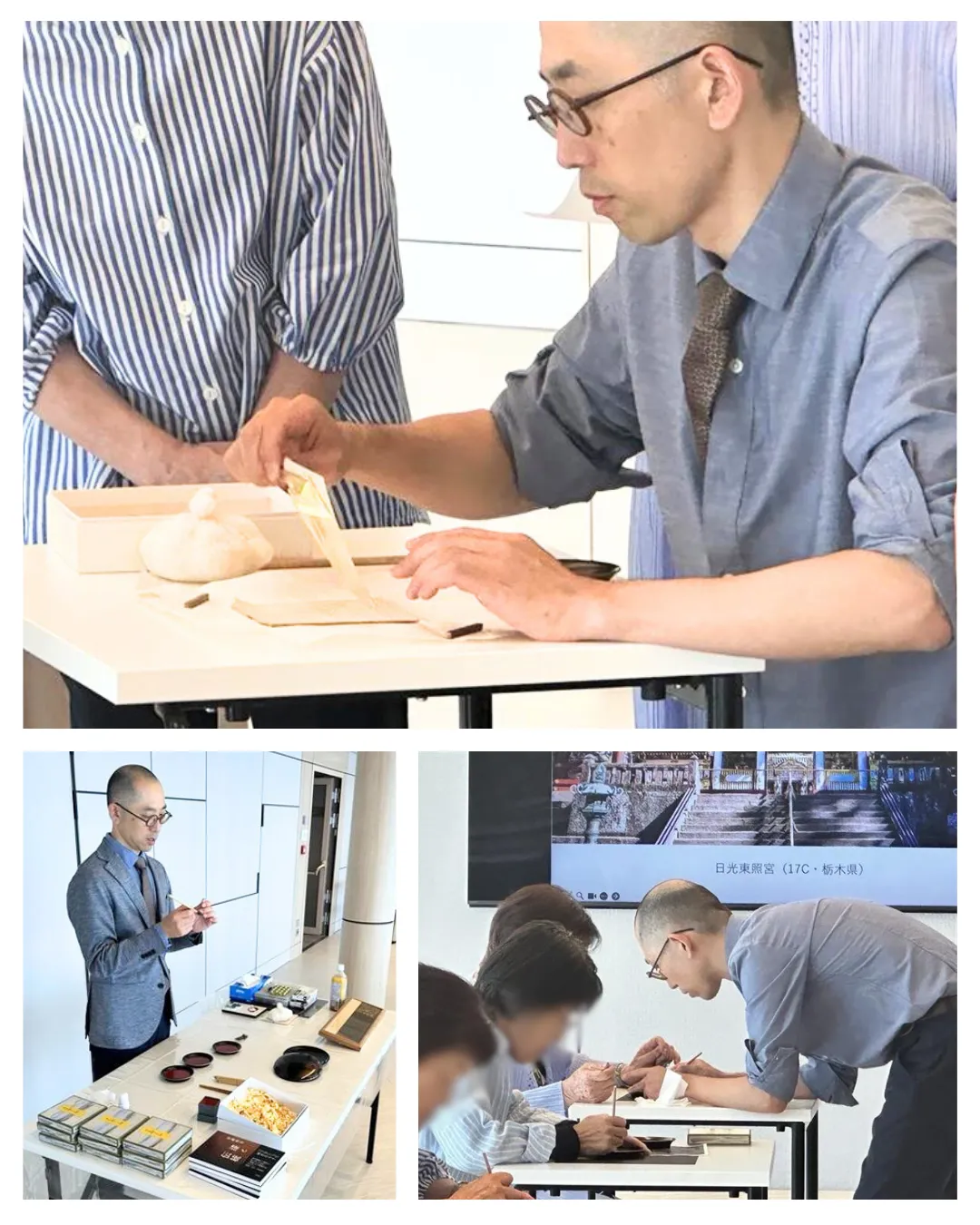
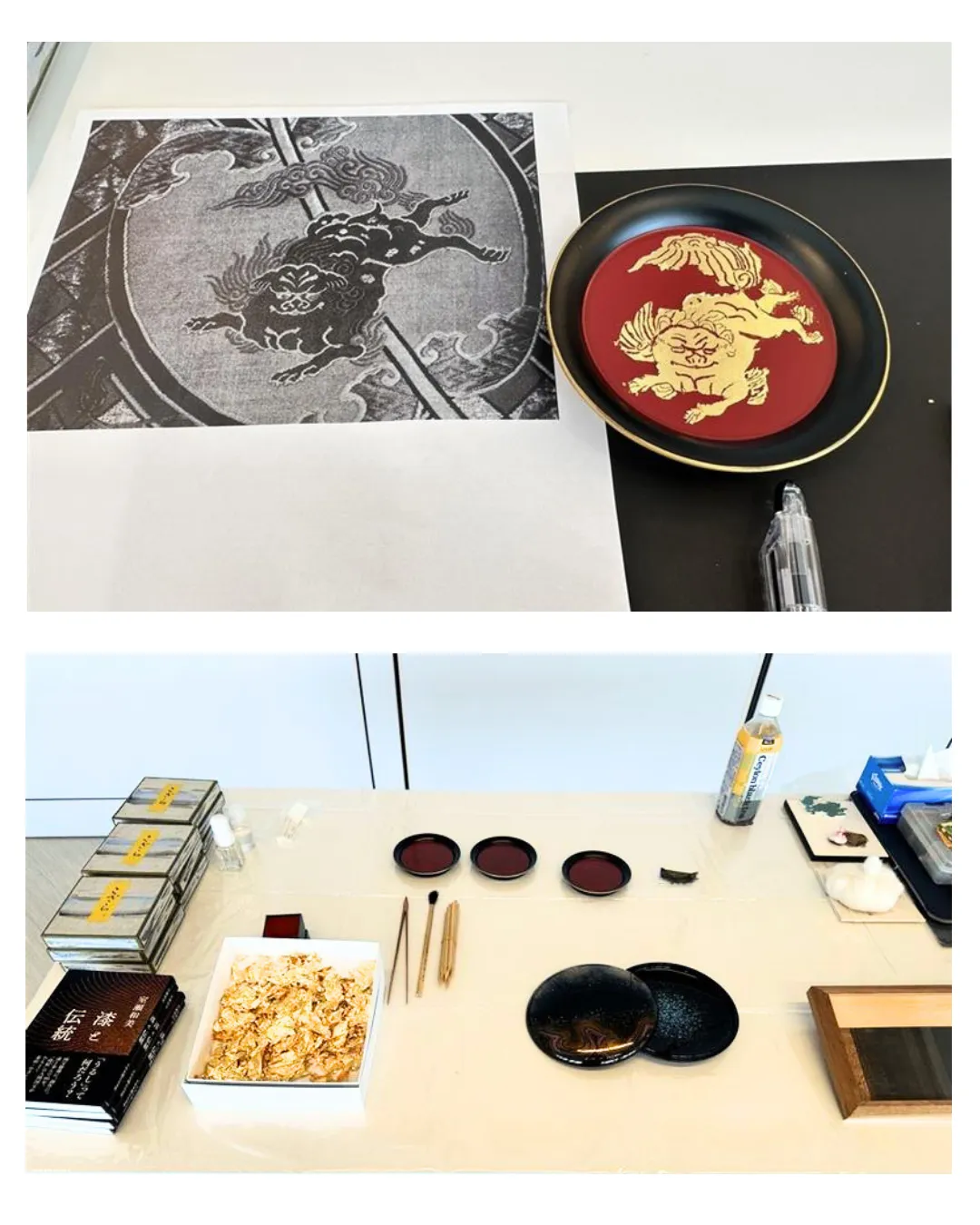
Following the talk, Murose led the “Haku-e Plate” workshop. Reservations filled immediately, and participants—guided by his warm explanations and precise advice—created original works using gold leaf and urushi. Murose personally added the final touches to each piece, and the completed works were unveiled during a shipboard presentation on the cruise’s final day.


Without prior public notice, the event was announced only via the ship’s digital signage, the morning program Morning Shower, and the onboard newsletter Asuka Daily, offering passengers a serendipitous encounter with the world of lacquer art.

Side Story: How Kazuo Yamagishi and Tomoya Murose First Met
While still a university student aspiring to a career in lacquer art, Tomoya Murose—on the advice of his father, Living National Treasure Kazumi Murose—entered the Ishikawa Prefectural Wajima Lacquerware Technical Training Institute, where he trained for three years under Kazuo Yamagishi.
Their first meeting was at Murose’s entrance interview, with Yamagishi serving as an examiner. “I still vividly recall him declaring, ‘I want to take lacquer as my medium and present it to the world.’ I had never met a student with such ambition,” Yamagishi recounted. Smiling, Murose replied, “I was rather naïve in those days.” Yamagishi responded, “And yet here you are, sailing on Asuka III, bringing your work to life aboard a ship that travels to ports around the globe—your dream is beginning to take shape.” Their words reflected a bond that, like lacquer itself, has deepened and grown more lustrous with time.