Guide to Care and Preservation:Textiles
To help you enjoy your cherished textile pieces for years to come, we offer guidance on how to protect them from the five key threats to dyed and woven fabrics.
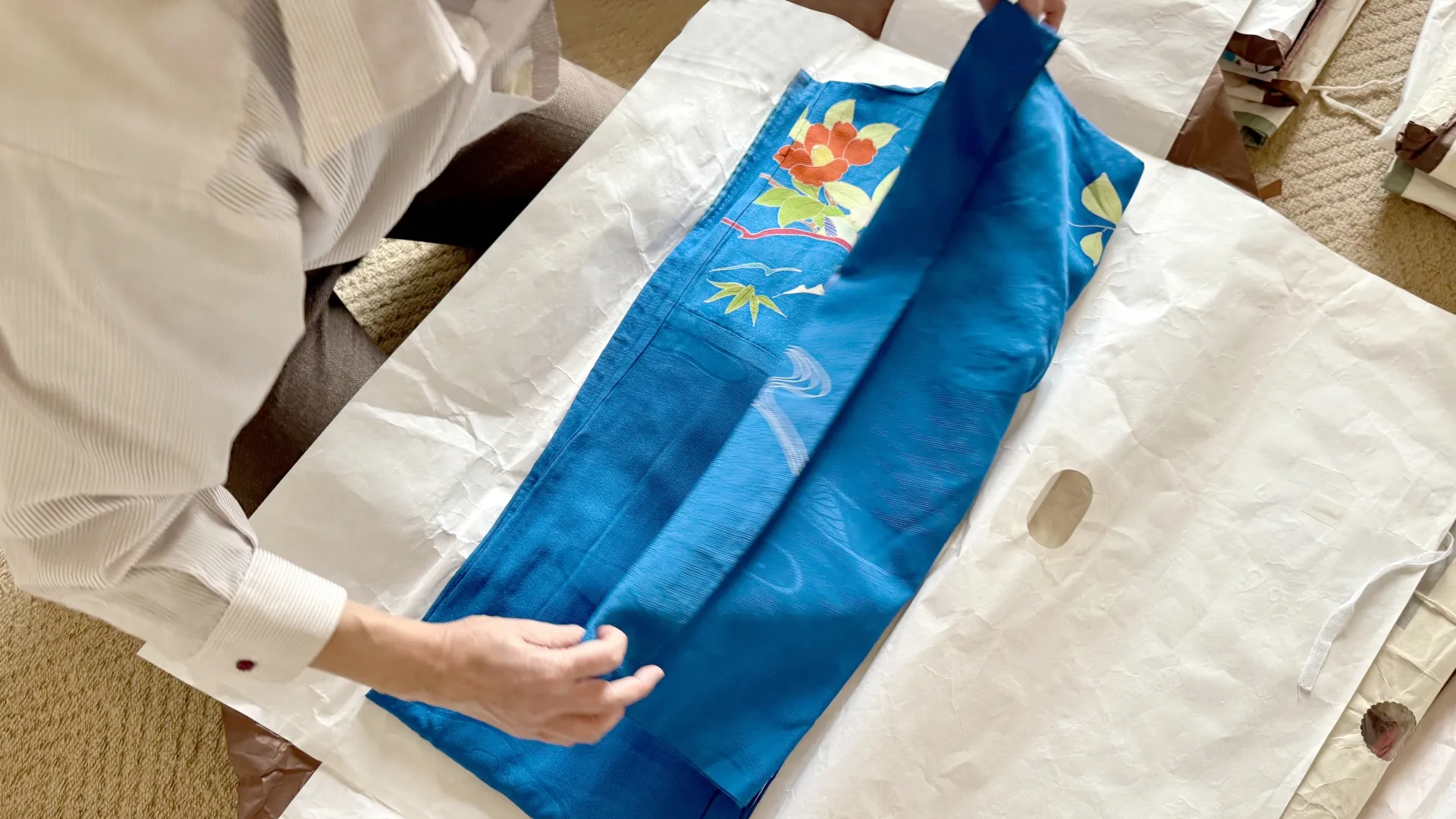
Preserving the Art of Dyeing and Weaving for Future Generations – A Guide to Proper Care and Storage |
Textiles crafted through traditional Japanese dyeing and weaving techniques are not only embodiments of cultural heritage but also inherently sustainable—capable of being lovingly passed down through generations with appropriate care.
In recent years, more people have come to appreciate inherited garments, such as furisode and tomesode, in a tradition affectionately known as“mama-furi”, where a daughter wears her mother’s kimono with pride and emotional connection. Beyond formalwear, these textiles often take the form of everyday items like fukusa(ceremonial wrapping cloths) and tenugui (hand towels), bringing a sense of refined craftsmanship into daily life.
To help preserve these treasured pieces for years to come, this guide introduces essential methods for protecting dyed and woven fabrics from humidity, mold, insects, and other potential hazards through mindful maintenance and careful storage.
Understanding the Nature of Textiles and Their Five Main Adversaries |

Dyed and woven textiles come in a diverse array of patterns and materials, making it easy to find a piece that resonates with one's personal taste. However, there are five key factors that can threaten their longevity: humidity, insect damage, airborne gases, residual proteins, and ultraviolet exposure. Shielding textiles from these elements is fundamental to proper preservation. Special attention is required for pure silk and wool, which are particularly appealing to insects and highly prone to mold development.
Note: Gaseous substances may arise from chemical reactions involving perspiration and can linger in the air or enclosed storage spaces like drawers and chests.
Practicing Regular Maintenance |
In addition to air-drying garments in the shade after use, it is important to conduct “mushiboshi”—the traditional airing of garments—two to three times annually. Ideal times include dry, sunny days following the rainy season or during the cool, dry months of autumn and winter. Hang the kimono or fabric in a well-ventilated, shaded area to allow accumulated moisture to dissipate naturally.
Creating an Ideal Storage Environment |
Store textiles in cool, dry conditions, out of direct sunlight. Dedicated storage cases or “tomo-bako” (original wooden boxes accompanying the item) offer excellent protection. Items such as fukusa should be stored flat and unfolded.
*
Through regular care and proper storage, the timeless beauty of dye-and-weave artistry can be preserved and passed on in pristine condition. Even the simplest act of attention you offer today becomes a heartfelt gift for the generations that follow.


