About Dolls
人形の歴史は古くは土偶や埴輪に始まり、やがてそれぞれの国や地域ごとの文化や特色をいかして伝わってきました。
| What are Dolls? |
The history of dolls dates back to ancient times with examples like clay figurines and haniwa, eventually evolving through the cultures and characteristics of different countries and regions. Dolls are created by shaping a base form, dressing them in costumes, and painting their faces. The entire body of the doll is made from materials such as paulownia wood, a clay-like substance called tōso made from paulownia wood powder mixed with glue, layers of Japanese paper, clay used in ceramics, among others. Once the body is formed, it is coated with gofun powder to smoothen the surface, dressed with fabric or paper, and then painted to finish.
| Making Process of Dolls |
① Determine materials
② Shape the form (carve wood, apply wood clay, paste paper, fire clay, etc.)
③ Dress the doll, finish it, and complete
Costumes and faces of dolls are created using various methods. Costumes can be made by techniques such as wood grain insertion, applying colored paper, attaching fabric, applying Japanese paper and then coloring with paint, among others. Heads and limbs can be treated with techniques like applying gofun powder, pasting Japanese paper, painting faces with a brush and paint, and more. Different types of carving tools and brushes are used to accommodate specific needs for creating intricate details.
<Gofun powder applied to the surface>
Gofun is a white paint made from finely ground powder of shells like oysters or clams, mixed with an adhesive called nikawa made from animal bones or skin. By applying multiple coats of gofun to the surface of the entire doll, it becomes hard, durable, and develops a beautiful gloss.
| Various Finishing Techniques |
Various techniques are employed to finish dolls.
① Nunobari: Applying different colored fabrics to create patterns.
② Kimekomi: Applying glue to the body's grooves and pressing the fabric's edge with a spatula.
③ Hamekomi: Creating a paper pattern, wrapping it with fabric to make parts, and then pasting them together.
④ Kamibari: Attaching dyed Japanese paper to create patterns.
⑤ Saishiki: Directly painting with various paints on the doll's body.
⑥ Saichō: Layering gofun mixed with paint, carving to reveal the lower color and create patterns.
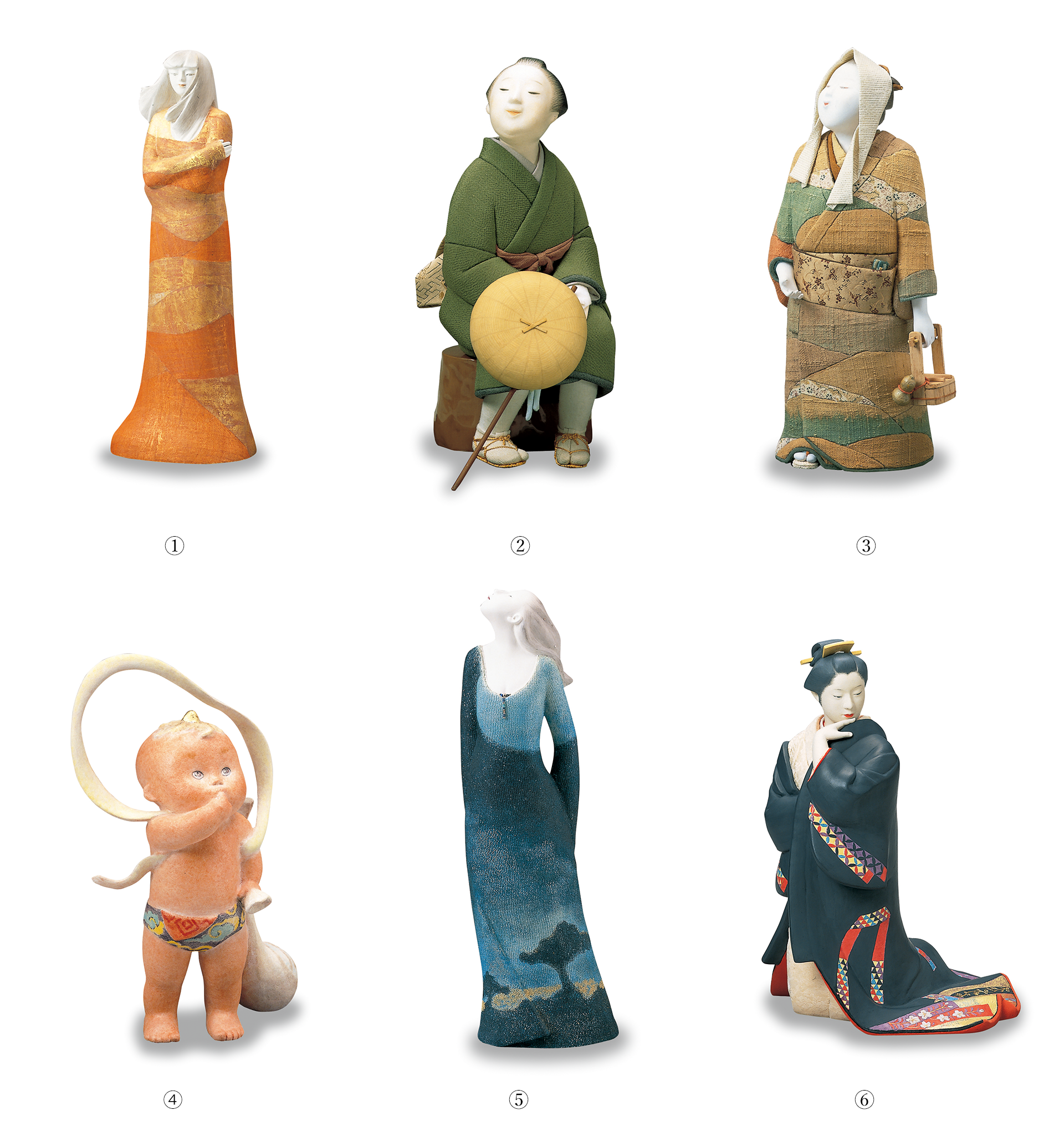
| Techniques |
Mokuchō ningyō (wooden dolls) Dolls made by carving paulownia wood into head, body, and limbs, then combining them using bamboo nails.
Tōso ningyō (tōso dolls) Dolls made by attaching kneaded paulownia wood powder mixed with glue to a core of paulownia wood.
Harinuki ningyō (papier-mâché dolls) Dolls made by forming shapes using fabric or Japanese paper.
Tōtai ningyō (ceramic dolls) Dolls made from clay used in ceramics, shaped and fired in a kiln.
<Source: "What is Traditional Kōgei?" Edited by Japan Kōgei Association East Japan Branch / Published by Unsodo, P54,55,59>


