About Metalwork
金属には「熱すると熔ける」「叩くと薄く延びて広がる」といった、他の工芸品の素材とは大きく異なる特徴があります。金工の作品はこういった金属の特徴をうまく活かしてつくられ、熔かした金属を型にいれて形をつくる「鋳金」、金属をたたいて形をつくる「鍛金」、形のできあがった金属に模様をつける「彫金」などの技法ごとに分類することができます。
What is Metalwork |
Metalwork refers to kōgei made by using metals. As you look around, you will notice that there are many metals around us. Metals have unique characteristics such as melting when heated and becoming thin and wide when hammered, which set them apart from materials used in other kōgei. Metalworks are created utilizing these characteristics. Techniques in metalwork include "chūkin (casting)", pouring molten metal into molds, "tankin (hammering)" by shaping metal with hammering, and "chōkin (chiseling)" to add patterns to finished metal shapes.
Making Process of Metalwork |
① Choose the metal
② Cast and shape the metal
③ Hammer the metal to form
④ Add Patterns
Metals Used and the Relationships |
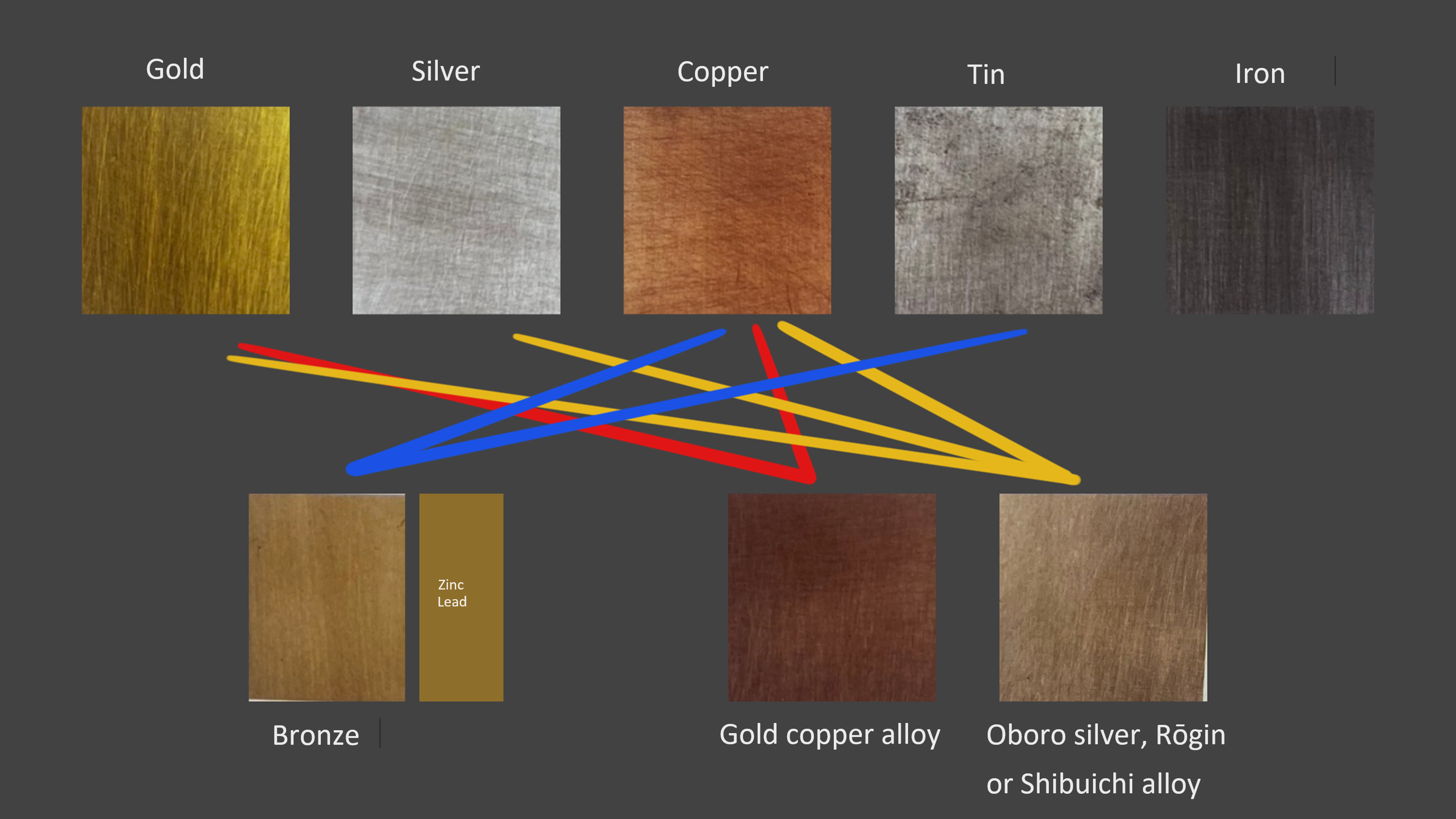
Metals used in metalwork include "five metals" and alloys. In Japan, historically, "five metals" are gold, silver, copper, tin, and iron. Alloys are made by mixing two or more metals like bronze, red copper, and oboro silver. These have been used as materials in metalwork.
Techniques |
Chūkin takes advantage of metal's characteristic of melting at high temperatures. The molten metal is poured into molds and solidified to create shapes. Creating the mold, such as wax molds, clay molds, and sand molds, is a crucial step.
The characteristic of metals to stretch and widen when hammered is used in Tankin. The metal, being initially rigid, needs to be softened by heating before repeated hammering to achieve the desired shape.
A special chisel called "tagane" is used in chōkin to carve various patterns on the metal surface with lines. Filling carved areas with different metals, and other various techniques are employed.
<Source: "What is Traditional Kōgei?" Edited by Japan Kōgei Association East Japan Branch / Published by Unsodo, P15>


